
Season 3, episode 2
What a Chapter Chair Actually Does
A board director who works with all six chapter chairs on the job nobody prepares you for.
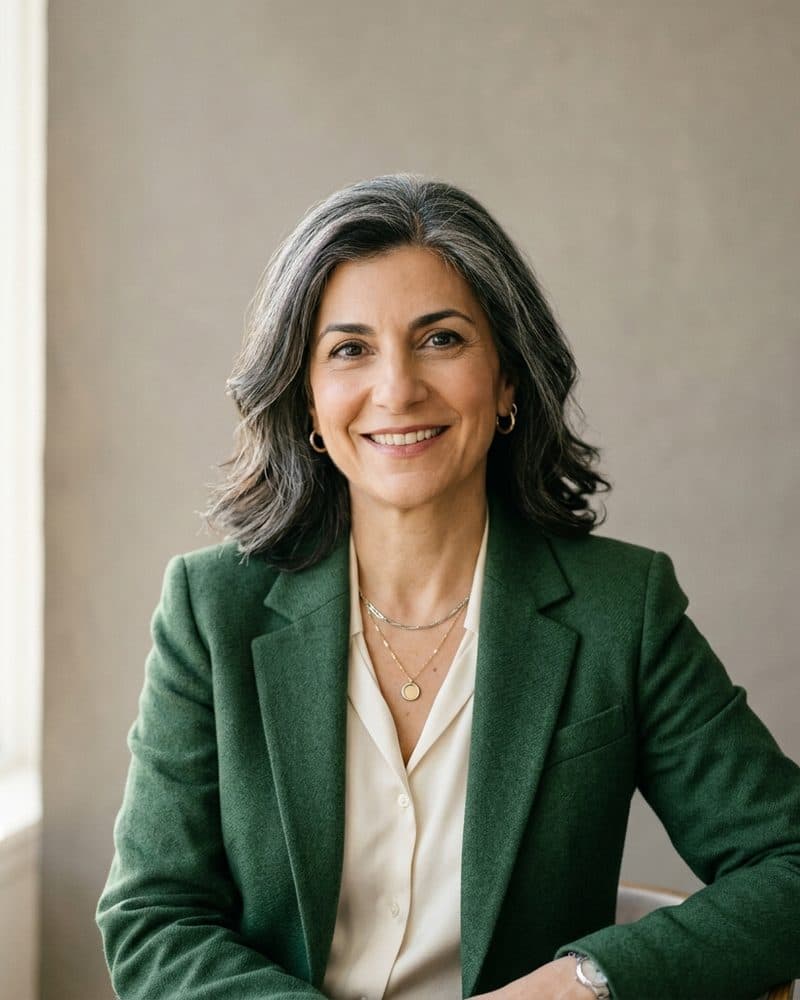
Celeste Vranas
Director-at-Large, Federation of Agricultural Cooperatives

Listen to the episode
What a Chapter Chair Actually Does
In this episode
Board Director-at-Large Celeste Vranas chairs the board's membership committee. She works directly with all six of NANA's chapter chairs. Here she talks about what that job actually involves — and why she's sponsoring a petition for a seventh chapter even though she doesn't chair one herself.
Guests
Celeste Vranas is on the NANA board as Director-at-Large. She is VP Member Services at the Federation of Agricultural Cooperatives. She also chairs the board's membership committee.
Chapters
00:00 Intro
01:40 What surprised you most in working with six different chairs?
06:30 The membership committee's real job
11:15 Why six chapters run so differently from each other
16:00 Sponsoring the Heartland petition without chairing a chapter
21:00 What Julian Achterberg's staff role adds to the picture
25:40 Where the six chairs disagree with each other
29:30 What she'd tell a new committee chair
32:30 Outro
Host: Celeste, let's clear something up first, since it's easy to get wrong from the title of this episode. You don't chair one of NANA's six chapters — you're a Director-at-Large on the board who chairs the membership committee, which works directly with all six chapter chairs. What surprised you most once you started working with all of them at once, rather than just one?
Celeste Vranas: How differently six chapters run day to day, even though they all report the same metrics to the same national board. On paper, each chapter has a chair, a set rhythm of meetings and a tie to national staff. In practice, the Southeast chapter runs almost like a shared-services cooperative because of Dana Whitfield's pilot.
Pacific Northwest is testing mobile-first member tools before anyone else. And Rocky Mountain is small enough that Tobias Kren does half the admin work himself — work a bigger chapter would hand off. Sitting above all six at once, instead of inside just one, made those differences visible to me.
Host: What does the membership committee actually do, distinct from what Julian Achterberg's staff role covers?
Celeste Vranas: Julian and his team run recruitment, renewals and the day-to-day chapter relationships. That's staff work, and it's constant. The committee I chair sits above that work. We set membership policy the board needs to weigh in on.
We check the health of each chapter against retention and growth benchmarks a couple of times a year. And we're the body that took up the Heartland chapter petition once Julian's staff work on it was ready for the board. Think of it as governance oversight of a function Julian's team runs day to day.
Host: Why do six chapters that report into the same national structure end up running so differently from each other?
Celeste Vranas: Geography and industry mix, mostly. Some regions have a lot of small, single-issue member organizations — Rocky Mountain's outfitters, small fisheries co-ops. A chapter chair there needs a different rhythm and a different kind of support than a chair in a dense region like Mid-Atlantic.
Members there are large enough to have their own government-relations staff already. We don't force the six to be the same, and I've come to think that's correct rather than something to fix. A one-size cadence would fit none of them well.
Host: You're the board sponsor of the Heartland chapter petition, but you don't chair a chapter yourself. How did that sponsorship end up with you rather than with one of the sitting chapter chairs?
Celeste Vranas: Partly because my own organization, the Federation of Agricultural Cooperatives, is based in Kansas City. That's right where the petition's 31 member organizations are concentrated. So I had a direct stake and direct ties in the region, even without a formal chapter role there.
And partly because a petition for a new chapter is exactly the kind of governance question the membership committee exists to carry to the full board. It shouldn't be championed by one of the six existing chairs. They might fairly be seen as having their own interest in how a seventh chapter gets carved out of existing territory.
Host: Where do the six chairs actually disagree with each other, if anywhere? It would be easy for this conversation to sound like everything runs in harmony.
Celeste Vranas: The clearest disagreement is over the shared-services model Dana pioneered in the Southeast. A couple of the other chairs doubt it would translate to their own regions. Grace Lindqvist in Pacific Northwest has told me directly she doesn't think her chapter needs a shared finance manager the way Southeast's smaller members did.
Her member mix skews toward much larger organizations than Dana's smallest textile mills. I don't think either of them is wrong. It's a real disagreement about whether a fix built for one chapter's member profile carries over to others. I'd rather let that play out honestly than paper over it for this recording.
Host: You mentioned Grace Lindqvist is skeptical of shared services for Pacific Northwest. Is there a chapter you think is actually a strong candidate to adopt something like Dana's model, even if it hasn't yet?
Celeste Vranas: Rocky Mountain, honestly — though Tobias hasn't proposed it, and I wouldn't want to put words in his mouth. It's a smaller chapter. Its member organizations look a lot like Southeast's smallest textile mills in staff size — a handful of people running a whole association. The Rocky Mountain Outfitters and Guides Council already uses Southeast's shared-services model remotely. That tells me the appetite exists in that region, even without a formal chapter-level program built around it yet.
Host: If you were advising whoever chairs the membership committee after you, what would you tell them to focus on in their first year?
Celeste Vranas: Visit all six chapters in person before making any policy recommendation to the board. It's tempting to read the retention numbers and the chair reports and think you understand a chapter. You don't, not really, until you've sat in one of their meetings and heard what members actually say to each other when national staff isn't in the room. I did that in my first year on the committee and it changed two recommendations I would otherwise have brought to the board without understanding why they'd have landed badly with a specific chapter.
Host: How often do you actually talk to the six chairs directly, versus getting a filtered version of chapter health through staff reports?
Celeste Vranas: I'm on a call with all six, together, once a quarter. I also try to have a one-on-one with each of them at least twice a year, outside that group setting. Some things a chair won't say in front of the other five.
Priya Ranganathan told me things about Great Lakes' onboarding challenges in a one-on-one that she'd never have raised on the group call. She wasn't hiding anything. It just felt like airing a problem in front of peers whose chapters were doing better on that specific metric.
Host: Has your view of what makes a chapter chair succeed changed since you started this role?
Celeste Vranas: Significantly. I came in assuming the best chairs would be the ones with the most polished administrative process — clean meeting minutes, tidy budgets. What I've actually seen is that the strongest chairs are the ones members will call directly with a problem, before it becomes a formal complaint to national staff. Marcus Idowu in Mid-Atlantic gets calls like that constantly, and I used to read that as a sign his chapter had more problems than the others. It's closer to the opposite — it's a sign members trust him enough to raise something small before it grows.
Host: Celeste, thanks for setting the record straight on this one.
Celeste Vranas: Thanks for having me. And credit where it's due — the six people actually chairing chapters, Priya, Elena, Marcus, Grace, Tobias, and Dana, are the ones doing the harder day-to-day version of this job. I get the board-level view. They get the Tuesday-night chapter call. If this episode's title got you here expecting to hear from one of them directly, go listen to Dana's episode later this season — she'll give you the version from inside a chapter, which is the one I can only describe secondhand.