
News
22 early-career staff paired with sitting executives at the Emerging Leaders Retreat
The Rocky Mountain chapter's two-day retreat matched each early-career participant with a sitting executive director in Denver.

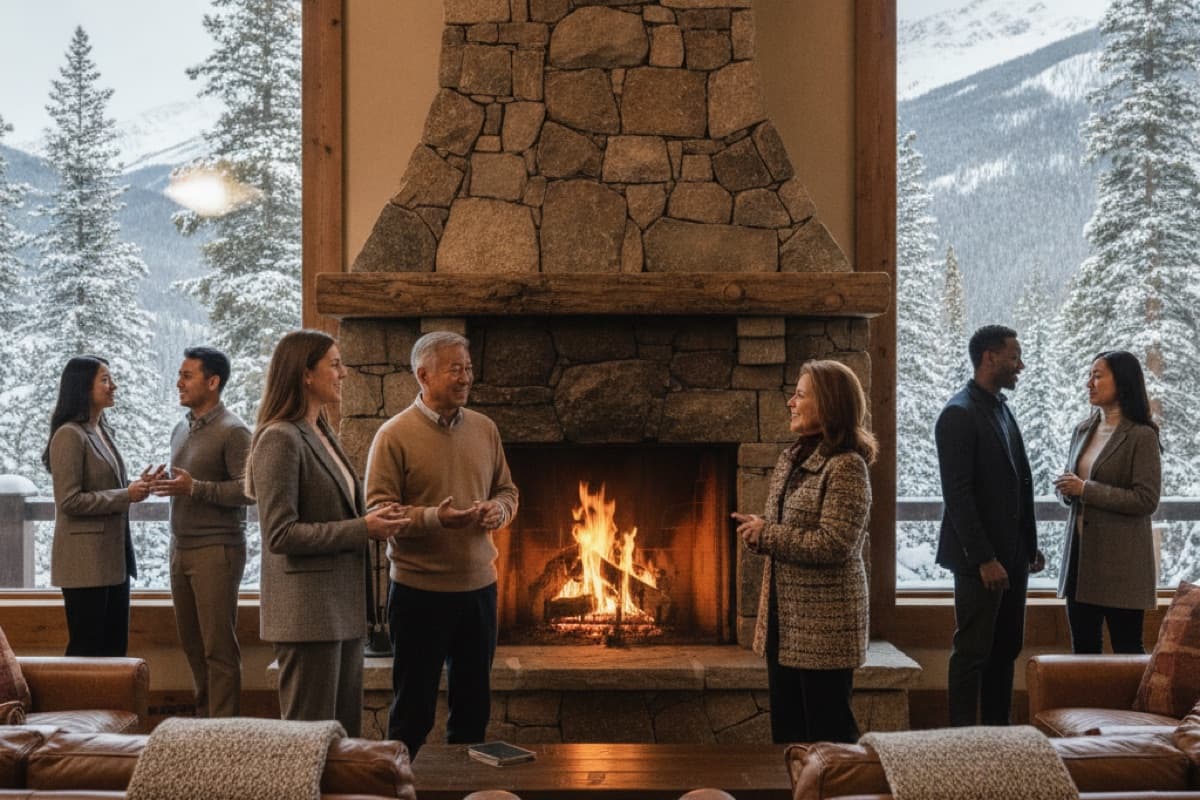
Twenty-two early-career association staff spent December 30 and 31 at the Rocky Mountain chapter's Emerging Leaders Retreat, each one paired for the full two days with a sitting executive director from a different member organization.
How the pairing worked
The retreat, held at the Rocky Mountain Chapter Lodge in Denver, runs on a simple structure: one early-career participant, one executive director, two days. Organizers matched pairs by sector rather than by chapter, so a membership coordinator at a small fisheries guild might sit with an executive director who runs a 600-employee credit union alliance.
Day one opened with individual pairs working through a career-mapping exercise, followed by small-group sessions on budget literacy, board relations, and reading a Form 990.
Day two shifted to open working time: pairs set two follow-up commitments each (a phone call, an introduction, a document to review) due within 90 days.
Evenings were unstructured, built around the lodge's stone fireplace rather than a program agenda.
22 participants, 22 executive directors, one pairing each — every participant works with a single sitting ED for the full two days, rather than rotating through several.
The point isn't mentorship in the abstract. It's one specific person answering one specific question you didn't know how to ask your own board.
— Tobias Kren, Rocky Mountain chapter chair
The retreat is capped at 22 pairs by lodge capacity. Housing and travel for out-of-state participants is coordinated through Kestrel Travel & Housing, the chapter's event partner.
Why Rocky Mountain runs it here
The chapter holds the retreat at its own lodge, 4400 Alpine Trail, in part because the setting removes participants from their own offices for two full days. Snow on the ground by late December is typical for Denver, and organizers say the isolation is part of the design: no laptops open in the main room, no phones during paired sessions.
Executive directors who participate are not paid an honorarium; the chapter treats the retreat as a standing volunteer commitment for its most senior members, renewed each fall when the chapter chair calls for volunteers.
Applications for the next retreat open in the fall, through the Rocky Mountain chapter page.
Who was in the room
Participants this year came from across the chapter's member roster: staff from a fisheries guild, a ski-area operators council, a maritime shippers association, and several smaller organizations with fewer than ten employees. Executive directors were matched deliberately outside participants' own sectors, on the theory that a fresh perspective on a budget problem is more useful than another person who already knows the answer.
Sessions ran in the lodge's main meeting room, with breakout conversations spilling into a side room and, weather permitting, onto a covered porch. No outside speakers were brought in; the two days belong entirely to the paired conversations and the small-group sessions on budget literacy, board relations, and reading a Form 990.
Chapter staff track one thing after the retreat ends: whether each pair completes its two follow-up commitments within 90 days. Results from this cohort are not yet in, but Rocky Mountain has used the same follow-up structure for prior retreats and treats the completion rate as the program's main measure of whether the two days translated into anything durable once participants were back at their own desks.