Brief
Federal Grant Indirect-Cost Brief
What a proposed 10% cap on federal grant indirect costs does to a small association grantee's budget, and how to estimate your own exposure.
- Members only
PDF · 68 KB

Summit 2027 early-bird pricing ends October 3, 2027 — register before it closes.Annual Leadership Summit
Guide
A step-by-step guide to writing strong letters to lawmakers and regulators.

Simone Radcliffe
Director of Public Policy, NANA

Farah Qureshi-Lindgren
Senior Policy Manager, NANA
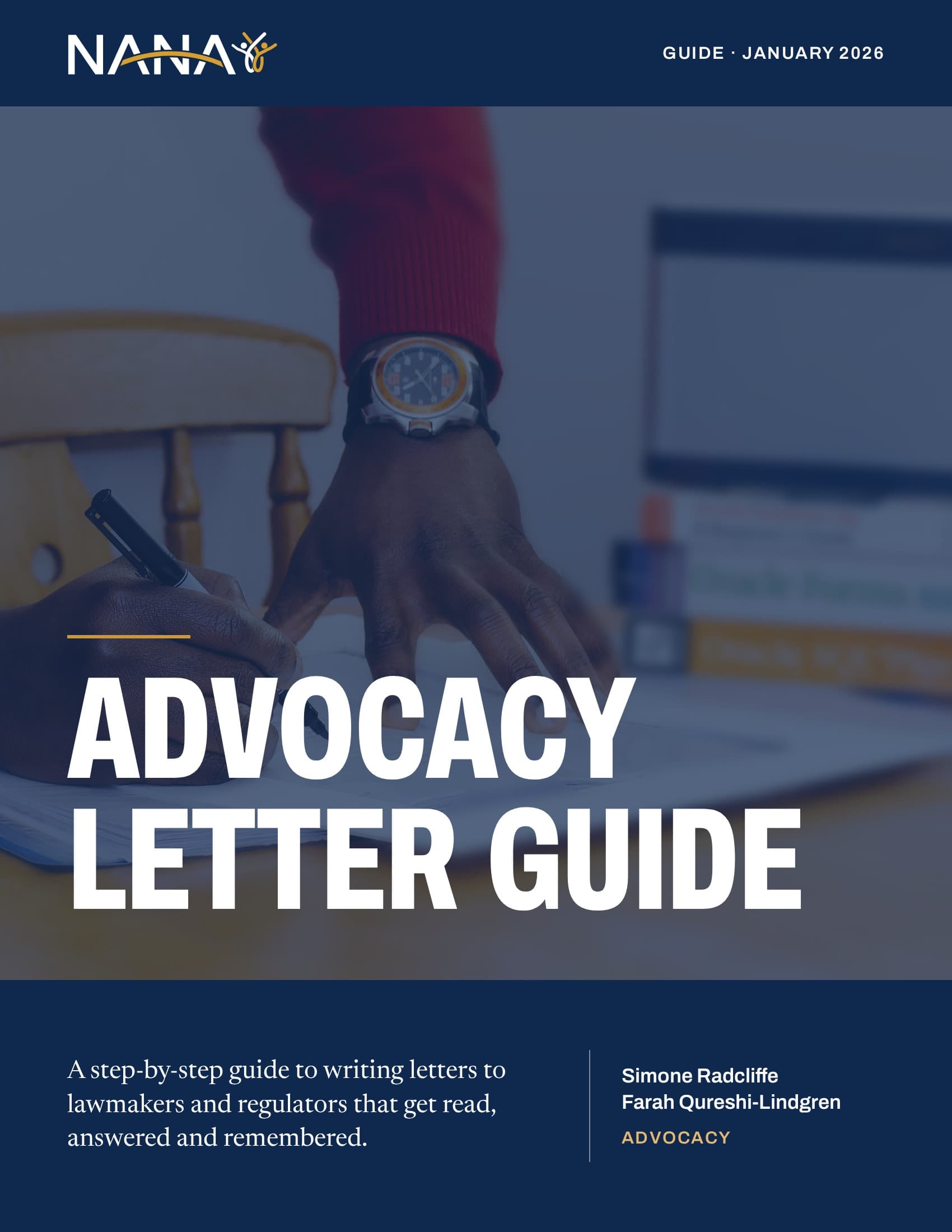
The Advocacy Letter Guide sets out how to write a letter to a member of Congress or a federal agency docket that a staffer will actually read and route to the right person. Director of Public Policy Simone Radcliffe and Senior Policy Manager Farah Qureshi-Lindgren, who track NANA's lobbying-disclosure and federal-grant files, wrote the guide from the letters NANA's own policy team drafts and reviews each year.
It covers the difference between writing to a Hill office and commenting on a regulatory docket, why a single, specific ask belongs in the first paragraph rather than the last, and how to use a local statistic without burying the request under it. The guide also flags the mistakes NANA's policy team sees most often in draft letters members send for review, and closes with a short pre-send checklist for anyone writing a letter for the first time.
Members preparing for Advocacy Day or responding to an open comment period should read this guide before they draft, not after.
Published by NANA's research team as part of the guide series.
Brief
What a proposed 10% cap on federal grant indirect costs does to a small association grantee's budget, and how to estimate your own exposure.
PDF · 68 KB
Brief
Whether a "call to action" email to members would count as a reportable lobbying contact under a proposed federal rule, and how to log grassroots campaigns now.
PDF · 80 KB

Toolkit
A section-by-section template for drafting a federal comment letter, built from NANA's own docket filings.
PDF · 84 KB