
Member spotlight
Running a forest-products council with four people, remote-first since 2020
Cascadia Forest Products Council's executive director has run a four-person staff without a shared office for six years.

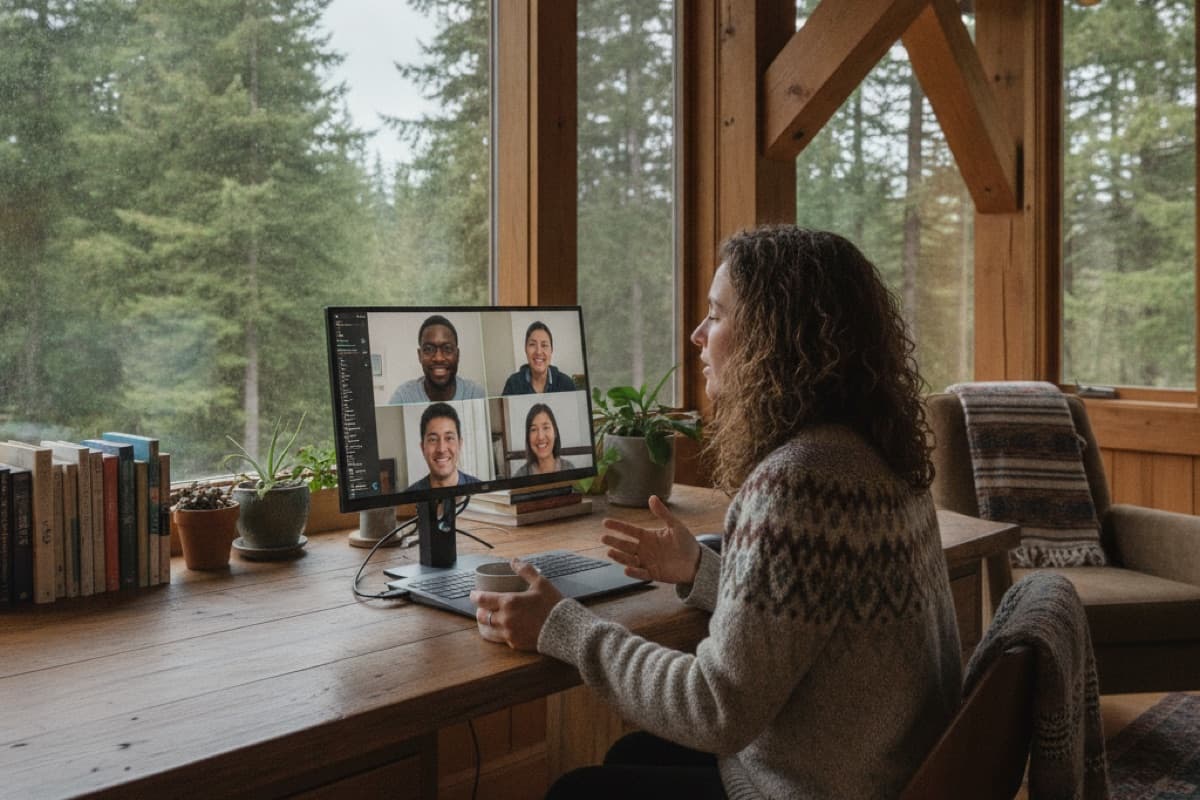
Signe Thorvaldsen has run the Cascadia Forest Products Council's four-person staff without a shared office since 2020. Her member companies are spread across Washington and Oregon mill towns, and she said the council's staff might as well be too.
Why remote-first, not remote-sometimes
Thorvaldsen drew the distinction at NANA's 2026 Pacific Northwest Spring Forum in Portland: a remote-first organization builds its calendar, its hiring, and its meeting habits around distributed work from the start, rather than treating an office as the default and remote work as the exception.
"We didn't send people home and call it remote. We built the job description around it. That's a different thing."
— Signe Thorvaldsen, Executive Director, Cascadia Forest Products Council
What it changes day to day
Staff meetings run on a fixed weekly schedule instead of hallway check-ins
New hires get a 90-day onboarding plan that assumes no in-person orientation
The council's 140 member companies are visited on a rotating regional schedule rather than summoned to a central location
The council has kept its four-person staff size since 2020, even as its membership has grown, a stability Thorvaldsen credits partly to lower overhead from not carrying office space.
What other small associations are asking
Thorvaldsen said the questions she gets most from other executive directors aren't about technology. They're about management: how to run a performance review over video, how to keep a four-person team from feeling isolated, and how to know when a role genuinely needs someone in the same room as a piece of equipment or a member site visit.
Her answer to the last question is specific to her sector: staff who inspect mill sites or attend in-person permitting hearings travel for that work, but the rest of the job runs on the same video calls and shared documents as any other remote role. She said the mistake she sees most often is treating "remote" as a single category instead of separating the parts of a job that require presence from the parts that don't.
Isolation is the real cost
Thorvaldsen was direct about the trade-off. A four-person staff spread across three cities doesn't run into each other in a hallway, and she said she has had to build that connection deliberately rather than assume it would happen. The council holds a standing weekly call that opens with ten minutes of unstructured conversation before the agenda starts, a practice she borrowed after watching new hires struggle to feel connected during their first few months.
"You lose the hallway conversation completely. If you don't replace it with something on purpose, your staff just doesn't have it, and you don't notice until someone's already decided to leave."
— Signe Thorvaldsen, Executive Director, Cascadia Forest Products Council
A peer group grows out of the question
The Pacific Northwest chapter has since started a remote-first staffing peer group for chapter members navigating the same questions, drawing members from associations with staffs as small as Thorvaldsen's four and as large as several dozen. Chapter Chair Grace Lindqvist said the group formed after Thorvaldsen's Spring Forum session generated more follow-up questions than any other session on the agenda that year.
Thorvaldsen said she doesn't present the council's model as one every small association should copy. What she does argue is that the choice deserves to be made on purpose, with a hiring plan and a communication rhythm built around it, rather than left as a byproduct of not having signed a lease.