
Season 1, episode 1
What an Association Is For
NANA's CEO opens the podcast with the founding story and what the society actually does for its 750-plus member organizations.
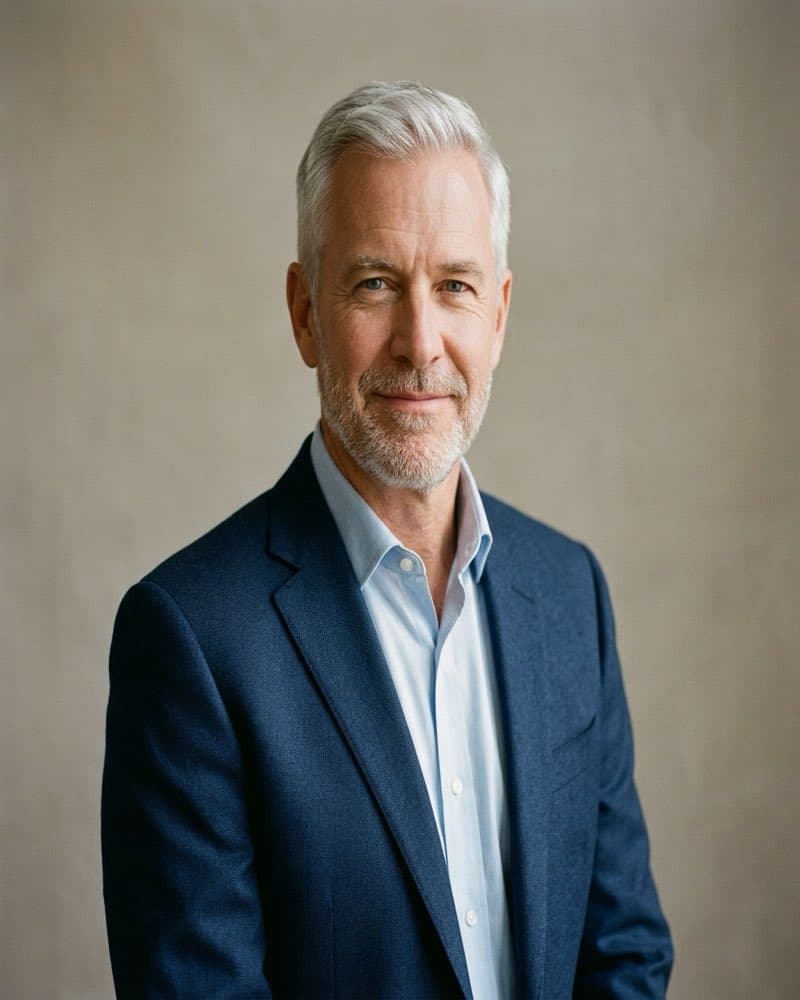
In this episode
NANA's first podcast episode. Host Amara Obiledu sits down with CEO Walter Abernathy to explain what an association of associations actually does — where NANA came from in 1998, why 750-plus member organizations pay dues to belong to it, and what the national staff does that a single trade group can't do for itself.
Guests
Walter Abernathy — Chief Executive Officer, NANA. CEO since 2017; before that he ran a regional trade association for a decade.
Chapters
00:00 Welcome to the first episode
01:35 Why NANA exists
06:50 1998: how six founding associations found each other
12:10 What "association of associations" means day to day
18:05 Dues, chapters, and where the money goes
23:30 Research, advocacy, and the CAE
28:15 What Walter wants members to take from this show
Transcript
Host: This is the first episode of the NANA podcast, and I want to start with the question I get asked most at every event I work the registration table for. What is NANA, actually?
Walter Abernathy: It's the association for the people who run associations. We have more than 750 member organizations — trade groups, professional societies, co-ops — and every one of them has an executive director or a membership director or a policy person who does a version of the same job. NANA exists so those people aren't doing it alone.
Host: Give me the founding story. 1998.
Walter Abernathy: Six executive directors, all from different sectors, started comparing notes at a conference that had nothing to do with any of their fields. One ran a hospital administrators' group, one ran a library federation, one was in agriculture. They realized they were solving the same problems — dues models, renewal cycles, board recruitment — with no shared place to do it. NANA was incorporated later that year as a 501(c)(6), membership open to any association, individual or organizational.
Host: And now it's 750-plus organizations and two million professionals served, on paper. What does that actually mean for a member?
Walter Abernathy: It means three things, and I try to say them in this order every time. Research first — we survey the sector every year so an executive director in Kansas City can go to her board and say, here's what 750 comparable organizations are actually doing on dues, on renewal, on staff pay. Second, peer community — six regional chapters, monthly roundtables, a Summit every year that used to run in June and is moving to December starting in 2027. Third, advocacy. We have a policy team in Washington that spends its time on the parts of federal and state law that hit every 501(c)(6) and 501(c)(3), postal rates, tax status, lobbying disclosure. No single 400-member museum coalition can staff that. We can, because we're funded across the whole sector.
Host: Let's talk about the money. Individual membership is $195 a year. Organization membership is $1,450, and that covers up to ten named seats. Why that structure?
Walter Abernathy: Because most of our members aren't individuals, they're associations, and an association wants more than one person to be able to use the benefits — the research, the discounts, the courses. Ten seats for $1,450 works out to well under $150 a person, and most of our organization members send more than one person to the Summit anyway. Chapter leaders get membership free while they're serving, because we're asking a volunteer to do real work for us and I don't think we should also charge them for the privilege.
Host: You mentioned chapters. There are six.
Walter Abernathy: Great Lakes, Greater Boston, Mid-Atlantic, Pacific Northwest, Rocky Mountain, and Southeast. Each one is run by a volunteer chapter chair, and each one runs its own cadence — Great Lakes and Southeast meet monthly, Rocky Mountain meets quarterly. National staff supports them, but the chapters set their own programming. That's on purpose. A roundtable in Chicago and a roundtable in Denver don't need to look the same.
Host: How big is national staff, for people who assume this is a bigger operation than it is?
Walter Abernathy: Thirty-eight people, full stop. Operating budget this fiscal year is $14.2 million, and the fiscal year runs July through June. We're not a big shop. Every one of those 38 people is doing something a member association asked us to do, whether that's the research team running the annual survey, the policy team drafting a comment letter, or Rosalind's events team building out a 1,050-person Summit like the one we just closed in June.
Host: You brought up the Summit. That was the largest one yet.
Walter Abernathy: 1,050 people, at our own conference center here in Washington. It's grown every year, and it's the one place all six chapters show up in the same room. We'll talk about how that gets built in a later episode — Rosalind runs it and she should be the one telling that story, not me.
Host: Last thing. NANA doesn't award the CAE credential. People sometimes think we do.
Walter Abernathy: Right, and I want to be precise about this because it matters. The Certified Association Executive credential is administered by the credentialing program itself, not by us. What we do is prepare candidates — bootcamps, study groups, courses that carry pre-approved CAE credit hours — and the Foundation gives scholarships to cover the exam fee for members who need it. We do not administer the exam and we never claim to.
Host: If someone listening runs a 200-person trade association and has never heard of NANA, what do you want them to do after this episode?
Walter Abernathy: Look at the State of Associations report. It's free, it's annual, and it will probably tell you something about your own organization you didn't know — how your renewal rate compares, how your dues compare. That's usually the thing that gets someone to join. Everything else follows from there.
Host: Before you go, I want to push on something. Six founding executive directors sounds tidy in hindsight. Was it actually that simple in 1998?
Walter Abernathy: No, and I don't want to make it sound like it was. It took most of a year to agree on the bylaws, and the sticking point was the same one boards argue about now — how much power sits with national staff versus the chapters. The compromise they landed on is basically what we still run. Chapters set their own programming and elect their own chairs. National staff runs the shared services — research, advocacy, the membership database — because duplicating those six times over would have been a waste of everyone's dues.
Host: Has that balance ever been seriously challenged?
Walter Abernathy: Every few years, yes. Usually when a chapter grows fast and its chair starts asking why national gets a say in anything. The honest answer is national doesn't get a say in chapter programming, and I try to say that plainly whenever it comes up, because I'd rather have that argument in the open than have a chapter quietly disengage.
Host: You said you ran a regional trade association before this. Does that change how you run NANA?
Walter Abernathy: Constantly. I spent a decade on the other side of this relationship, deciding whether a membership renewal was worth the invoice. So when my own team proposes something, my first question is always whether an executive director with a two-person staff would see the value in the first six months, not the first three years. If the answer is no, we either rebuild it or we don't ship it.
Host: Last question, and it's a blunt one. What's the thing NANA does worst right now?
Walter Abernathy: Communicating what membership actually includes. We have people who've been members for years and don't know the research library exists, or that chapter leader roles are free. That's on us, not on them, and it's part of why I wanted this podcast to exist in the first place — a place to say plainly what we do, in the sector's own language, without a sales pitch attached to it.
Host: Walter, thanks for being the first guest on this thing.
Walter Abernathy: Thanks for having me. I suspect I'll be back once or twice before this show is done with me.

Listen to the episode
32 min · Season 1, episode 1