
Season 1, episode 4
Six Chapters, One Membership
Director of Membership and Chapter Relations Julian Achterberg explains how six regional chapters work under one national membership, and where renewals actually happen.
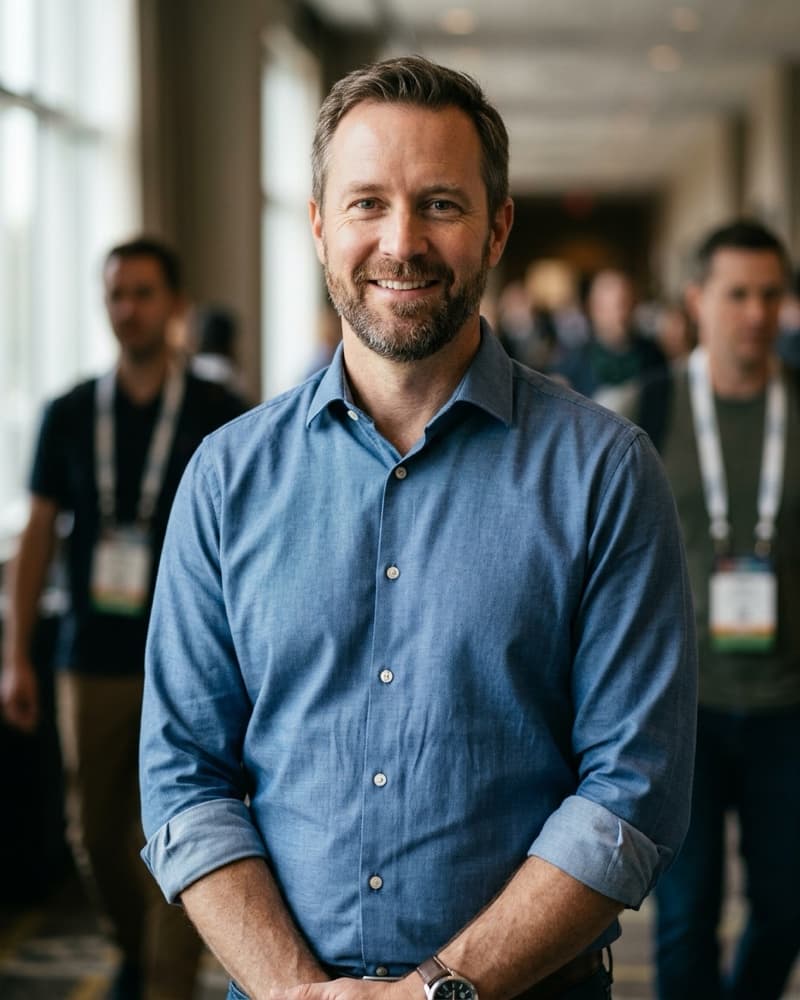
Julian Achterberg
Director of Membership and Chapter Relations, NANA
In this episode
Director of Membership and Chapter Relations Julian Achterberg joins host Amara Obiledu to explain how NANA's six regional chapters — Great Lakes, Greater Boston, Mid-Atlantic, Pacific Northwest, Rocky Mountain, and Southeast — relate to one national membership, how renewals actually get worked chapter by chapter, and what his job looks like when a chapter grows faster than the others.
Guests
Julian Achterberg — Director of Membership and Chapter Relations, NANA. Runs recruitment, renewals, and the six chapter relationships; staff lead on the proposed Heartland chapter.
Chapters
00:00 Intro
01:30 One membership, six chapters — how that actually works
07:10 Why chapter size varies so much
13:00 Renewals: national database, chapter relationships
18:45 Southeast crossing 200 member organizations
24:00 The proposed Heartland chapter
29:30 What a chapter chair's job actually is
Transcript
Host: Julian, your title covers two jobs that sound like they could pull in opposite directions — membership and chapter relations. How do they actually fit together?
Julian Achterberg: They're the same job, just at two different scales. When someone joins NANA, they join national membership — that's the $195 individual rate or the $1,450 organization rate — but almost immediately they're also affiliated with one of our six regional chapters based on where they're headquartered. My team runs the national side of that relationship, and the chapter chairs, who are volunteers, run the local side. My job is making sure those two layers don't work against each other.
Host: Walk me through the six chapters, because the sizes are pretty different from each other.
Julian Achterberg: Mid-Atlantic is our largest, at 265 member organizations, which makes sense given we're headquartered in Washington and a lot of national-level trade groups sit here too. Southeast is second at 205. Greater Boston runs just over 120. Great Lakes is around 98, Pacific Northwest 41, and Rocky Mountain 34. Add those up and you're around 767 organizations total, which is more than the 750-plus figure we usually quote publicly — that number gets updated periodically, and the chapter totals move faster than the headline stat does.
Host: Why the spread? Is Rocky Mountain at 34 doing something wrong?
Julian Achterberg: Not at all — it's mostly geography and sector density. There are simply fewer eligible associations headquartered across Colorado, Utah, and the surrounding states than there are in the DC corridor. What I look at instead of raw size is engagement relative to size. Rocky Mountain runs a quarterly cadence instead of monthly, and their Emerging Leaders Retreat in Denver every December is one of the most consistently well-attended programs we run anywhere, proportional to chapter size.
Host: Let's talk renewals, since that's the other half of your title. How does a renewal actually happen for an organization member?
Julian Achterberg: It runs on a 120-day cycle before the anniversary date. We send the first notice at 120 days, a reminder at 60, and then my team starts making direct onboarding-style calls in the final 30 days for any organization that hasn't responded — not a collections call, a genuine check-in, because most non-renewals aren't a decision, they're an oversight. The chapter chair sometimes knows that member personally and can make the call land differently than a national staff email would.
Host: Southeast just crossed 200 member organizations. What changed there?
Julian Achterberg: Part of it is the shared-services pilot Dana Whitfield's chapter has been running since 2023 — small associations sharing a finance manager and an events coordinator through the Southeastern Textile Manufacturers Council. That model gives us a very concrete pitch to a small association that's on the fence: join NANA, and you also get access to a peer group that's solving the exact staffing problem you have. That pitch converts better than a generic membership sales pitch ever does.
Host: You're also the staff lead on the proposed Heartland chapter. What does that involve?
Julian Achterberg: Thirty-one Kansas City-area member organizations petitioned in May, led by the Federation of Agricultural Cooperatives. Celeste Vranas is the board sponsor. My job is running the process the Chapter Launch Guide lays out — confirming there's enough organizational density in the proposed states, Missouri, Kansas, and Nebraska, to sustain a seventh chapter's programming without cannibalizing Great Lakes or Rocky Mountain membership. The board is expected to vote on it next year. Until then, we have six chapters, and I'm careful not to talk about it as though it's decided.
Host: What does a chapter chair's job actually look like, day to day?
Julian Achterberg: It varies more than people expect. Some chairs run a tight monthly roundtable and little else. Others, like Priya Ranganathan at Great Lakes, build out a full slate — the Winter Roundtable, a mentorship pairing program for new staff, a virtual quarterly circle for finance officers. None of that is required of them. It's volunteer labor on top of their day job running their own association, and I think the biggest part of my job is making sure national never treats that labor as free just because it's unpaid.
Host: Is there friction between national and the chapters, ever?
Julian Achterberg: Sure, usually around resourcing — a chapter wants a national staff person at every meeting, and we can't do that for six chapters at once. What keeps it from becoming a real conflict is that chapter chairs set their own programming. National doesn't get a vote on what a chapter runs locally, only on shared services like the database and renewal calendar. Once that boundary is clear, most of the friction is just scheduling, not power.
Host: Last question. If someone's association is on the fence between which chapter to affiliate with, does that happen, and how do you handle it?
Julian Achterberg: It happens more than you'd think, especially near a regional border — an organization headquartered in, say, Providence could plausibly sit with Greater Boston. We affiliate based on headquarters location by default, but we'll accommodate a request if a chapter chair on the receiving end agrees and the member has a real reason, usually that most of their own member base sits somewhere else. It's not a common override, but I'd rather bend the rule than force a bad fit.
Host: Before we wrap, I want to go back to the renewal calls you mentioned. You said most non-renewals are an oversight rather than a decision. How do you actually know that, rather than assuming the best?
Julian Achterberg: Because we ask, every time, on the call. If it were really a decision — budget cut, leadership change, dissatisfaction with a benefit — we'd hear a specific reason, and we log those separately so the research team can see if a pattern's forming. What we actually hear, the large majority of the time, is some version of "the invoice went to someone who left" or "we meant to and it slipped." That's a process failure on the member's side, not a verdict on NANA, and it's exactly the kind of thing a 30-day call catches that an email reminder doesn't.
Host: Does the chapter chair get involved in those calls directly, or is that purely a national staff function?
Julian Achterberg: It depends on the chapter and the relationship. For a member the chair knows personally — which happens constantly in a chapter the size of Rocky Mountain, at 34 organizations — the chair calling directly lands better than a national staff member they've never met. For a larger chapter like Mid-Atlantic, at 265 organizations, the chair simply can't have that kind of relationship with every member, so national staff carries more of that load there. I try to match the approach to the chapter's actual size rather than run one script everywhere.
Host: You mentioned the Chapter Launch Guide governs how a new chapter gets evaluated. What's actually in that process, at a high level?
Julian Achterberg: It sets the bar for organizational density in the proposed territory, requires a board sponsor and a staff lead, which is me for Heartland, and lays out a transition plan for how affected neighboring chapters — in this case Great Lakes and Rocky Mountain — get consulted before anything goes to a board vote. The goal is that a new chapter adds capacity rather than just redrawing lines around organizations who were already engaged somewhere else.
Host: Julian, thanks for walking through the whole map.
Julian Achterberg: Anytime. Ask me again once Heartland has a vote.

Listen to the episode
34 min · Season 1, episode 4