
Season 1, episode 5
Advocacy for a Codes Council
Owen Castellanos of the National Council of Building Officials on what member-driven advocacy looks like from the member's side of the relationship.
In this episode
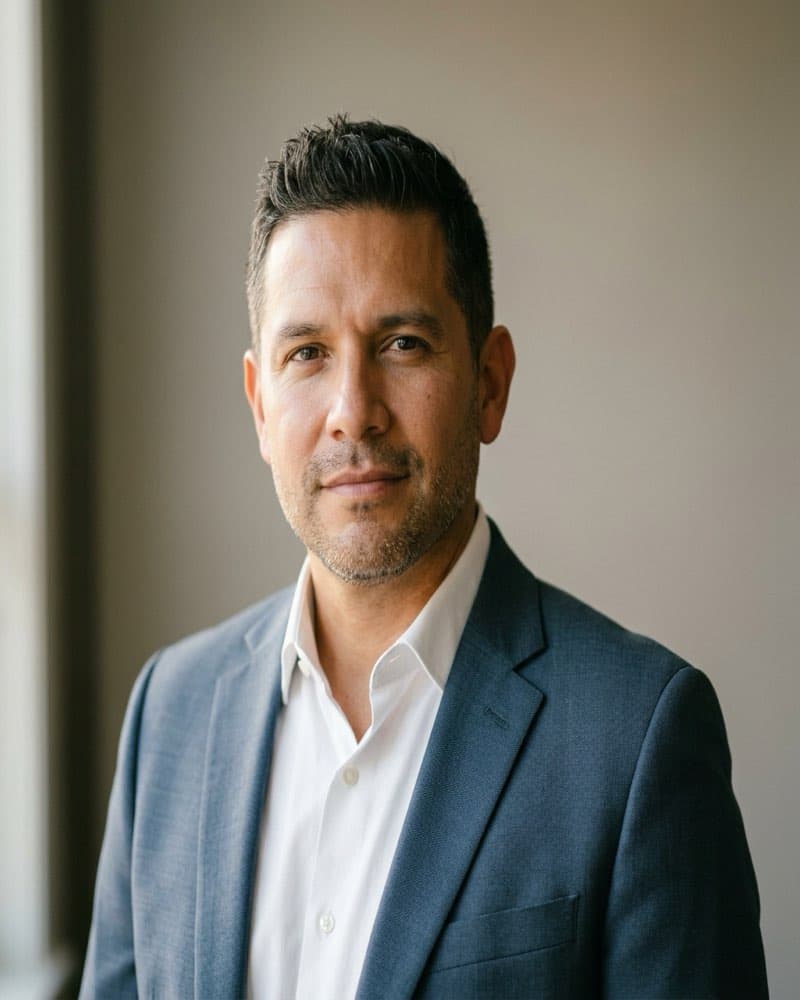
Owen Castellanos, Executive Director of the National Council of Building Officials, joins host Amara Obiledu to talk about what it's actually like being on the member side of NANA's advocacy program — how a codes-and- standards organization decides which fights are worth NANA's shared capacity, and what he wants a national policy team to understand about a 9,200-member sector that doesn't get much attention on its own.
Guests
Owen Castellanos — Executive Director, National Council of Building Officials. NANA member since 2014.
Chapters
00:00 Intro
01:20 Who NCBO is and why it needs a shared policy voice
06:30 Deciding which fights are worth raising with NANA
12:15 What it's like sitting in a coalition letter with 40 other members
17:50 Where NANA's advocacy has actually changed something for NCBO
22:40 Owen's own retirement and NCBO's coming transition
27:10 What Owen wants NANA's policy team to hear plainly
Transcript
Host: Owen, you've been a NANA member since 2014, and you run a 9,200-member organization of your own. Start with who NCBO is, for anyone who doesn't know building-codes associations.
Owen Castellanos: The National Council of Building Officials represents code officials — the people who inspect construction and enforce building codes at the state and local level. We're 9,200 members and 31 staff, headquartered in Falls Church. It's a technical, unglamorous sector, and that's exactly why we need a shared advocacy voice. A code official's job touches federal and state law constantly, but our own staff is small relative to how much regulatory territory we cover.
Host: How does a decision get made to bring something to NANA's policy team versus handling it yourselves?
Owen Castellanos: We handle almost everything technical ourselves — code interpretation, model-code development, that's core to what NCBO does and no one else should be doing it for us. What we bring to NANA is anything that's really a cross-sector issue wearing our sector's clothes. Nonprofit postal rates, for instance, hit us the same way they hit a 400-member museum coalition or a library federation. On something like that, NANA's policy team can carry weight in a room that NCBO alone can't.
Host: What does it actually feel like being one signature among many on a coalition letter?
Owen Castellanos: Honestly, it's the most efficient use of my time all year. I've sat on coalition letters with 40 other member organizations, and what strikes me every time is how little duplicated effort there is — Simone's team drafts the letter, circulates it, incorporates specific sector language where it matters, and we're not each independently lobbying the same staffer with slightly different asks. That coordination is worth more to a mid-sized association like mine than almost any other single membership benefit.
Host: Can you point to something concrete NANA's advocacy actually changed for you?
Owen Castellanos: The federal employee conference travel issue is the clearest one. When agencies tightened travel approvals a couple of years back, our members lost access to a meaningful share of the code officials who work for state and municipal government, because their travel to our own events got harder to approve. NANA led a coalition letter on exactly that, and travel limits eased in the spring of 2025. I'm not going to claim NANA alone did that, but I know our sector's voice was in the room because Simone's team put it there.
Host: You're retiring at the end of March 2027. What does that mean for NCBO right now?
Owen Castellanos: It means we're already deep into a leadership transition, and it's part of why NCBO hired outside communications support this year — managing that transition publicly is its own project, separate from the day-to-day advocacy work. I've been at this for over a decade and I want to hand off an organization that's stable, not one that's mid-crisis when the next director walks in.
Host: Last thing. What do you want a national policy team to understand about a sector like yours that doesn't get much public attention?
Owen Castellanos: That quiet doesn't mean unimportant. Building codes aren't a headline issue, but they touch public safety directly, and a 9,200-member professional body that enforces them deserves the same advocacy seriousness as a higher-profile sector. I've never felt like NANA's team treated us as a smaller priority because our issue doesn't make the news. That matters more to a member than people realize.
Host: Owen, thank you for making the case from the member's side.
Owen Castellanos: Glad to. It's not a perspective staff always gets to hear directly.
Host: Before you go, one more question. You mentioned NCBO does its own technical advocacy separately from what you bring to NANA. Is there ever tension between the two — a moment where NANA's coalition position and NCBO's own technical position pulled in different directions?
Owen Castellanos: Rarely, but it's happened. The clearest example was early on, when a coalition letter on a broader regulatory issue used language that was slightly too generic for our sector's specifics. I raised it, Simone's team revised the language before it went out, and that was the end of it. What I appreciate is that NANA drafts these letters expecting that kind of feedback, rather than treating a member's technical correction as friction to route around.
Host: Does that kind of back-and-forth happen for every coalition letter, or only the ones that touch your sector directly?
Owen Castellanos: Only the ones that touch us directly, and honestly that's appropriate. I don't weigh in on postal-rate language the same way a library federation would, because I don't have their operational knowledge. The system works because each member organization is expected to flag its own sector's blind spots, not because NANA's staff can anticipate every one of them alone.
Host: That's a fair note to end on. Thanks again, Owen.
Owen Castellanos: Thank you. Actually, let me add one more thing, since I don't often get the chance to say it out loud. Advocacy Day is the other half of this relationship people forget about. Every April, NANA brings member staff to Washington for Hill meetings, and NCBO sends someone every year specifically because a member showing up in person carries weight a coalition letter can't. Letters get read by staffers. A person in the office gets remembered.
Host: How many Hill meetings does a typical Advocacy Day actually produce?
Owen Castellanos: It's grown every year I've participated. What matters isn't the raw count so much as the mix — we try to hit both offices that are already sympathetic, to keep the relationship warm, and offices that are genuinely undecided, where a member's specific story can move something. NCBO usually sends two people, myself and our government relations staffer, and we split the day to cover more ground.
Host: Does NANA prep members before they go in, or is it mostly show up and talk?
Owen Castellanos: There's real preparation. Simone's team runs a briefing beforehand covering the specific asks for that year and the talking points tied to whatever's live in the policy pipeline. I've sat through a few of those briefings, and they're specific enough that a first- time attendee who's never done a Hill meeting in their life can walk in and hold their own. That's not nothing for a member organization that doesn't have its own government-relations staff at all.
Host: Last thing, genuinely this time. If a member association is reading this and has never sent anyone to Advocacy Day, what would you tell them?
Owen Castellanos: Send someone once before you decide it's not worth it. I was skeptical the first year too, assuming a code official showing up in Washington for a day wouldn't change anything. What changed my mind was watching a staffer's expression shift mid-meeting when our person described what a rule actually meant for an inspector's Tuesday. That's not a thing a comment letter does on its own.
Host: That's a fair note to end on. Thanks again, Owen.
Owen Castellanos: Thank you. And tell whoever's producing this show that a codes-and-standards guest was worth the airtime.
Host: Noted, on the record.
Listen to the episode
31 min · Season 1, episode 5