
Season 1, episode 6
Running a 1,050-Person Summit
Director of Meetings and Events Rosalind Kettering on the logistics behind June's 1,050-attendee Leadership Summit.
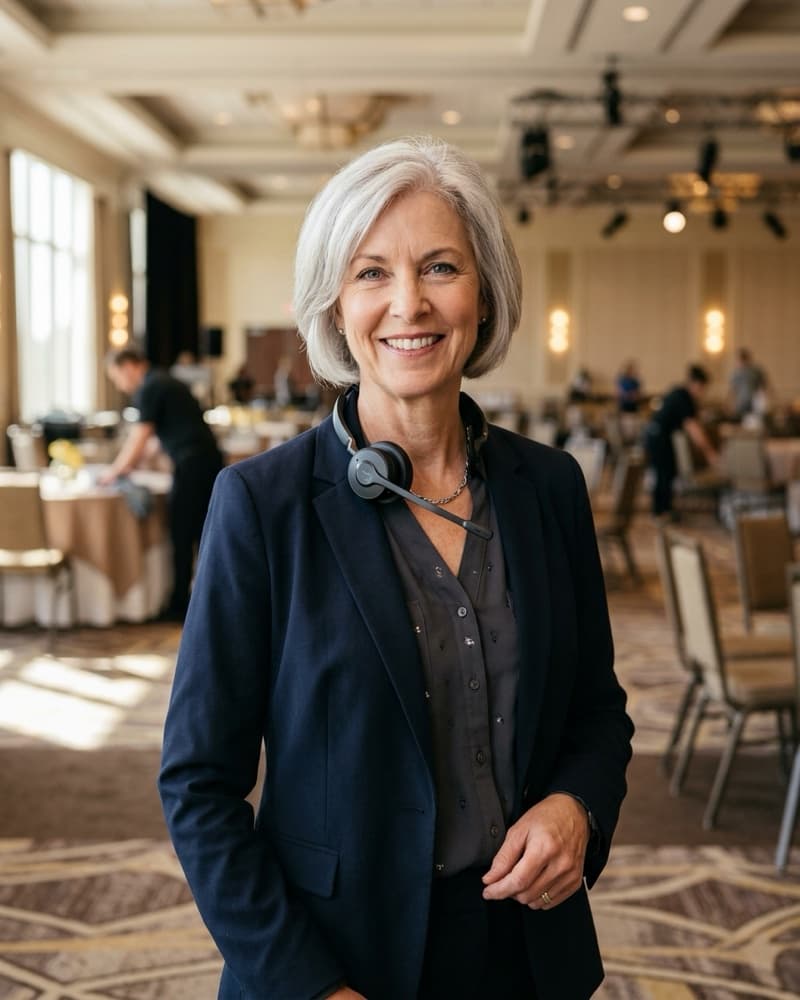
In this episode
Director of Meetings and Events Rosalind Kettering, who has run every Leadership Summit since 2014, joins host Amara Obiledu to walk through the logistics behind June 2024's Summit — 1,050 attendees at NANA's own National Conference Center — from room blocks to the sponsor floor to the year-round planning cycle nobody sees.
Guests
Rosalind Kettering — Director of Meetings and Events, NANA. Has run every Summit since 2014.
Chapters
00:00 Intro
01:25 A year-round job for a three-day event
07:00 1,050 attendees, and why that number matters
12:40 Room blocks and the hotel contract fight nobody sees
18:15 Sponsors: Civic Ledger, Meridian Benefits, and the sponsor floor
23:50 What breaks first when something goes wrong
29:10 Why Rosalind pushed to move the Summit to December
Transcript
Host: Rosalind, you've run this Summit every year since 2014. Start with the thing people never think about — how long does planning next year's Summit actually take?
Rosalind Kettering: It never stops. The day this year's Summit ends, my team is already debriefing what to change, and we sign next year's venue contract not long after that. A three-day event in June is the visible output of essentially a year-round planning cycle — housing, catering, sponsorship sales, program content, all running in parallel on their own timelines that have to converge on the same three days.
Host: 1,050 attendees this year. Is that number itself meaningful, or is it just a headline?
Rosalind Kettering: It's meaningful because it's grown every year without us changing venues, which tells us we've built real headroom into the National Conference Center's capacity. It's also meaningful because crossing round numbers changes what breaks. At 900 people, a slightly undersized breakout room is an inconvenience. At 1,050, the same room is a fire-code problem, and I've had to re-block sessions mid-cycle because registration outpaced a room's capacity.
Host: Let's talk about the hotel contract, because you've said before that's the fight nobody sees.
Rosalind Kettering: Room blocks are a negotiation between our attrition risk and the hotel's revenue guarantee. We contract a block of rooms at a negotiated rate, and if we don't fill it, we owe the hotel the difference under the attrition clause. Kestrel Travel and Housing handles a lot of the housing management for us, but the underlying contract terms — attrition percentage, food and beverage minimums, room-rate escalators for multi-year agreements — those I negotiate directly, and that's the part that actually determines whether a Summit is financially healthy before a single attendee registers.
Host: How do you forecast the block size a year out, when you don't know final registration yet?
Rosalind Kettering: History, mostly, with a conservative adjustment. I look at how this year's actual registration compared to last year's forecast, and I build next year's block off that trend rather than off hope. I'd rather slightly undershoot the block and manage an overflow hotel than oversize it and eat an attrition penalty on rooms that never got booked.
Host: Sponsors are a big part of the Summit floor. Who's actually on it?
Rosalind Kettering: Civic Ledger Software and Meridian Benefits Group are our Presenting sponsors, and they get the most visible placement — general session signage, the sponsor floor's prime real estate. Summit Hall Partners, a Premier sponsor, handles a lot of our venue relationships more broadly, which makes them a natural fit for Summit visibility too. Northline Insurance Trust and Coalition Print and Mail sponsor at the Supporting tier. Every sponsor level gets a defined package, and I hold the line on what's actually delivered, because a sponsor who feels shortchanged one year doesn't come back the next.
Host: When something goes wrong at a Summit this size, what actually breaks first?
Rosalind Kettering: Almost always registration flow at the front desk on day one. You can model catering and room capacity fairly precisely, but 1,050 people arriving over a compressed window, many of them checking bags and picking up badges at the same time, creates a bottleneck that no amount of planning fully eliminates. We've added more check-in stations every year, and it's still the first hour I'm personally watching most closely.
Host: You've been vocal about moving the Summit to December, starting in 2027. Why push for that change?
Rosalind Kettering: Two reasons, and I made both cases to the board. December dates in Washington run meaningfully cheaper on hotel rates — we estimated a $61 a night difference on the median room — and December sits right before the CAE winter testing window, which means members who are studying for the credential can use the Summit's sessions as part of their final preparation instead of the timing being a coincidence. The board voted for it in November 2025. 2026 stays in June as the last spring edition, so there's an 18-month gap before the first December Summit, and I've told my team to treat that gap as extra planning runway, not a reason to relax.
Host: Last question. What's the one thing about running an event this size that you wish members understood, that they never see from the attendee side?
Rosalind Kettering: That almost nothing they experience as spontaneous actually is. The hallway conversation space that feels organic was deliberately oversized in the floor plan. The gap between sessions that feels generous was calculated against how long it actually takes 1,050 people to move between rooms. None of that is a complaint — it's the job — but I do think members would trust the Summit more, not less, if they knew how much of what feels effortless took a year to build.
Host: Rosalind, thank you very much for pulling back the curtain on all of this.
Rosalind Kettering: Any time. Come find me on-site next June, I'll be the one watching the check-in line.
Host: One last thing before we go. You mentioned re-blocking sessions mid-cycle when registration outpaces a room. How often does that actually happen, and what does fixing it look like in practice?
Rosalind Kettering: At least once or twice a cycle at our current size. Fixing it usually means swapping a popular session into a larger room and moving whatever was originally scheduled there into the smaller space, which sounds simple until you remember every room swap also moves signage, AV setup, and sometimes catering placement for a coffee break timed to that session. It's a full logistics chain reaction from one scheduling decision, and I'd rather catch it eight weeks out than discover it the morning of.
Host: How far in advance do you actually lock the floor plan, given all of that?
Rosalind Kettering: Roughly ninety days out for the room assignments, though the overall floor plan is set much earlier, closer to six months. After the ninety-day mark I treat changes as exceptions rather than normal adjustments, because every vendor downstream of that plan — catering, AV, signage, security — is building their own schedule against it. Moving one piece late in the cycle has a cost that isn't always visible in the room itself.
Host: Does that ever change which sessions you program in the first place?
Rosalind Kettering: It does. If a topic clearly outgrows its room two years running, I'll program it into a larger room by default the next year rather than wait for it to surprise us again. The Summit's own attendance data is one of the best planning tools we have, and ignoring it in favor of a fixed floor plan would be a mistake.
Host: Rosalind, thank you again.
Rosalind Kettering: Thank you. And if any chapter chairs are listening and want a walk-through of how their own regional roundtable's logistics scale compared to something this size, my door's open. The principles are the same at 40 people or 1,050 — you're just managing the consequences of being wrong at a different order of magnitude, and that difference is worth walking through with anyone planning to grow their own event.

Listen to the episode
35 min · Season 1, episode 6