
Season 2, episode 1
Reversing a Membership Decline
Season two opens with League of Independent Pharmacists Chief Membership Officer Noor Haddad-Ellison on the four-year membership decline she reversed between 2023 and 2025, and what she'd tell an association still in the middle of one.
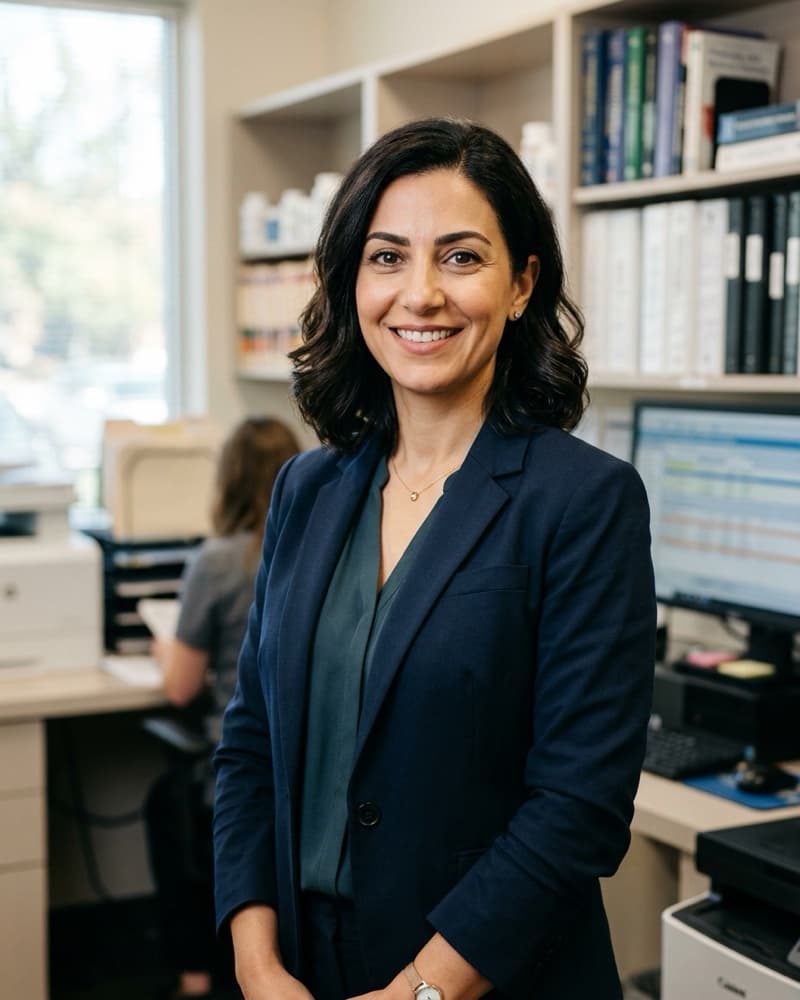
Noor Haddad-Ellison
Chief Membership Officer, League of Independent Pharmacists
In this episode
Season two opens with Noor Haddad-Ellison, Chief Membership Officer at the League of Independent Pharmacists, describing the four-year membership decline the League pulled out of between 2023 and 2025 — what caused it, what didn't work, and what finally did.
Guests
Noor Haddad-Ellison — Chief Membership Officer, League of Independent Pharmacists. Reversed a four-year membership decline, 2023–2025.
Chapters
00:00 Intro
01:30 How the decline started
07:20 What the League tried first, and why it didn't work
13:00 The turn: what changed in 2023
19:15 Independent pharmacy ownership as a shrinking pool
24:30 Recruiting members who don't fit the old model
28:30 Bringing the board around to a governance change
32:15 Voting rights: owners versus practitioners
35:20 Measuring the reversal
38:30 Outro
Transcript
Host: Noor, welcome to season two. You reversed a four-year membership decline that ran through several difficult budget years for the League. Start at the beginning — when did the League first notice it was losing members, and what did it look like?
Noor Haddad-Ellison: It wasn't a single bad year. It was a slow bleed starting around 2019 that didn't get named as a crisis until we'd lost several years of members in a row. Independent pharmacy ownership itself was shrinking — consolidation, chains buying out independents, some owners retiring without a successor. Our membership tracks pharmacy ownership pretty closely, so as the pool of independent owners shrank, so did we, and for a while we treated that as an external fact we couldn't do much about.
Host: What did the League try first, once it did name it as a crisis?
Noor Haddad-Ellison: The instinct was to double down on recruiting more of the same member we'd always recruited — independent pharmacy owners — just harder. More outreach, a discount on first-year dues, a referral program. None of it moved the number, because the problem wasn't that we were bad at recruiting independent owners. The problem was there were fewer of them to recruit each year. We were fishing harder in a shrinking pond.
Host: What changed in 2023 that actually turned it around?
Noor Haddad-Ellison: We stopped treating "independent pharmacy owner" as the only member we were built for. Our board did a hard look at who actually works inside independent pharmacies now — staff pharmacists, pharmacy managers who aren't owners, compounding specialists — and asked whether our value proposition, which had always been built around ownership issues like reimbursement and regulatory compliance, had anything to offer them. It did, we just hadn't packaged it that way or priced membership for someone who isn't an owner making an owner's budget decision.
Host: So this was a membership-category change, not just a marketing push?
Noor Haddad-Ellison: Exactly, and that's the part I'd stress to anyone listening who's in year two of a decline and still trying marketing fixes. We restructured to add an individual-practitioner tier alongside the existing organization tier, priced for someone whose employer isn't paying their dues. That single change opened up a member population that was actually growing — staff pharmacists — while independent ownership kept shrinking around us.
Host: How big a shift was that in practice? Did existing owner-members push back on sharing the association with non-owners?
Noor Haddad-Ellison: Some did, early on — a few owners felt the association's identity was specifically about ownership issues, reimbursement fights, regulatory burden that falls on the owner, not the staff pharmacist. We addressed that by keeping ownership issues as the advocacy core of what we do, since that hasn't changed, while adding programming — clinical practice topics, career development — that speaks to the practitioner tier specifically. It's an addition, not a replacement.
Host: How did existing owner-members who pushed back come around, if they did?
Noor Haddad-Ellison: Most of them came around once they saw practitioner members showing up to the same advocacy fights they cared about — reimbursement policy affects a staff pharmacist's job security almost as directly as it affects an owner's balance sheet, even if the exposure isn't identical. A few owners never fully came around, and I don't think that's unusual or something to hide. Any real governance change costs you some support from the group most invested in how things used to work.
Host: Talk numbers. What did the reversal actually look like, year over year?
Noor Haddad-Ellison: We bottomed out in 2023, after four straight declining years before that, and from there it's been three consecutive years of net growth through 2025 — not dramatic single-year jumps, but a real, sustained direction change after four years of the opposite. Practically all of the new growth came from the individual- practitioner tier. Owner-member count is still roughly flat to slightly down, which tells me the underlying ownership-consolidation trend hasn't reversed — we just stopped depending entirely on it.
Host: How did the board actually come around to restructuring membership categories? That's not a small governance change for most associations.
Noor Haddad-Ellison: It took roughly a year of presenting the same data in different ways until it landed. What finally moved the board wasn't a persuasive pitch from me, it was a member survey we ran of staff pharmacists working inside our existing owner-member pharmacies, asking directly whether they'd join an association like ours if there were a membership category built for them. The response was strong enough that the board stopped debating the concept and started debating the mechanics — pricing, voting rights, whether a practitioner member gets a seat on committees. Real numbers from real prospective members moved the conversation faster than my argument alone ever did.
Host: Did adding a practitioner tier change the association's governance at all — do practitioner members get the same voting rights as owners?
Noor Haddad-Ellison: That was actually the hardest negotiation, harder than the pricing. We landed on practitioner members having full voting rights on general association business, but certain owner-specific advocacy positions — reimbursement policy, in particular — are decided by a committee that's majority owner-members, since that's the group most directly exposed to those decisions financially. It's not a perfectly clean solution, and some practitioner members have told us they'd like more say on those issues too. We're revisiting that governance question again this year.
Host: Is there a lesson here for an association that isn't in decline yet, but wants to avoid ending up in one?
Noor Haddad-Ellison: Look at who's actually doing the work in your sector today, not who was doing it when your association was founded. Ours was founded around pharmacy ownership because, decades ago, that's who ran independent pharmacies day to day. The profession changed — staff pharmacists and pharmacy managers became a much bigger share of the people actually practicing — and our membership definition didn't change with it for a long time. That gap is exactly where a decline like ours starts, quietly, years before it shows up in the renewal numbers.
Host: If another association's chief membership officer is listening right now, mid-decline, what's the one question you'd tell them to ask first?
Noor Haddad-Ellison: Whether the decline is actually about your association, or about the size of the population you've defined as eligible to join. Those require completely different fixes. If it's you, fix your value proposition for the same population. If it's the population, you have to be honest about whether there's an adjacent population your association could legitimately serve, and whether your governance and pricing are willing to change to let them in. We spent at least two years trying to fix a population problem with an association-quality fix, and it never was going to work.
Host: Noor, thanks for opening the season with this one.
Noor Haddad-Ellison: Thanks for having me. If it helps even one association skip the two wasted years we spent, it was worth telling — and if anyone's mid-decline right now and wants to compare notes directly, find me at the Membership Growth Summit this April. I'll be there both days.

Listen to the episode
40 min · Season 2, episode 1