
Season 2, episode 5
The Membership Director's View
Recorded the day before the 2026 Membership Growth Summit, Institute of Coastal Resilience Planners Membership Director Beatriz Solano-Whitaker previews what she's speaking about, and what a membership director's job looks like from inside a niche planning association.
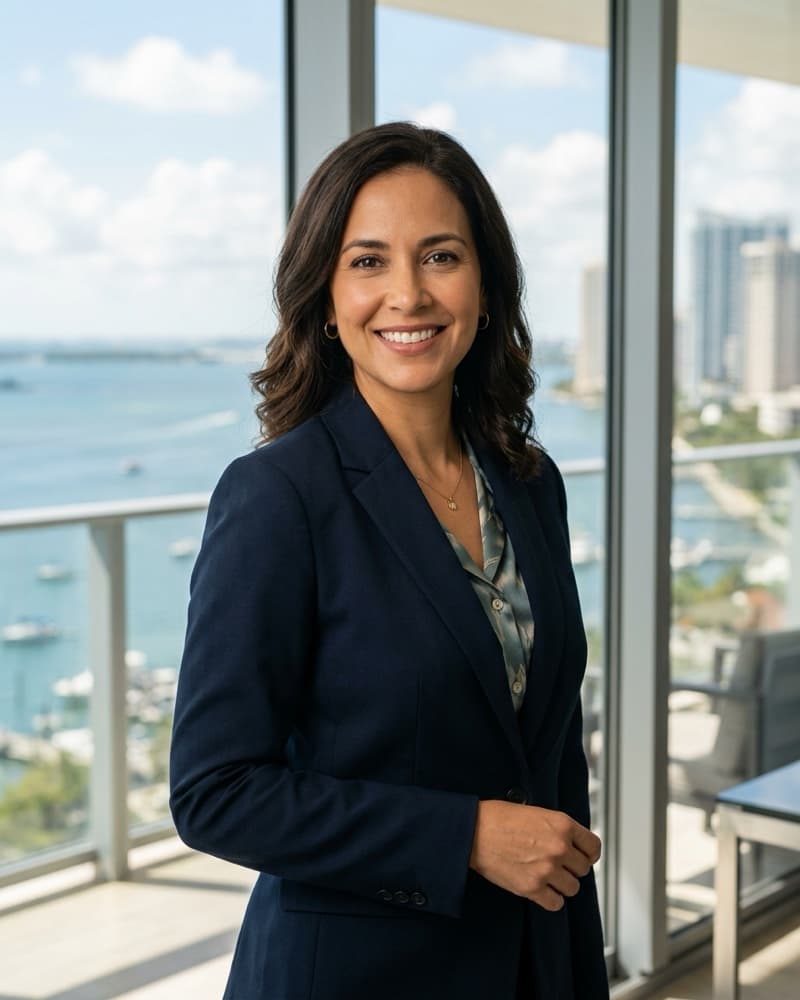
Beatriz Solano-Whitaker
Membership Director, Institute of Coastal Resilience Planners
In this episode
Recorded the day before the Membership Growth Summit opens in Atlanta, Institute of Coastal Resilience Planners Membership Director Beatriz Solano-Whitaker talks through what her job actually looks like day to day at a 2,400-member planning association, and previews her session at tomorrow's Summit.
Guests
Beatriz Solano-Whitaker — Membership Director, Institute of Coastal Resilience Planners. Membership Growth Summit speaker, 2025 and 2026.
Chapters
00:00 Intro
01:20 A day before the Summit
06:10 What a membership director's week actually looks like
11:30 Coastal planners as a member base
16:45 Recruiting from a shrinking pool of federal-adjacent jobs
20:30 Hybrid meetings as a membership-retention tool
23:15 Working with Graham Tolliver-Reyes
25:40 Who Beatriz wants to compare notes with this year
28:10 What she's speaking about tomorrow
31:00 Pitching a department head, not just a planner
33:40 Procurement cycles and public money
36:00 Advice for a first-time Summit attendee
37:30 Outro
Transcript
Host: Beatriz, you're recording this the day before you fly to Atlanta for the Membership Growth Summit, which is now in its second year. What's tomorrow like for you?
Beatriz Solano-Whitaker: Mostly logistics today, honestly — final version of my slides, packing, checking that our booth materials shipped on time. Tomorrow's the Summit's opening day, and I'm speaking on the second day, so there's a full day of sessions I actually get to sit in as an attendee first, which I look forward to as much as speaking.
Host: This is your second year speaking at the Summit. What keeps bringing you back?
Beatriz Solano-Whitaker: The Summit is one of the only rooms where membership directors from very different sectors compare notes on the same underlying problem. I run membership for a 2,400-member planning association in Miami; the person next to me might run it for a 900-member agricultural co-op. The sectors don't overlap at all, but the actual membership mechanics — recruitment, renewal, engagement — turn out to rhyme more than you'd expect.
Host: Tell me about your membership base. Coastal resilience planning is a pretty specific field.
Beatriz Solano-Whitaker: It is, and that specificity is both our strength and our constraint. Our 2,400 members are coastal planners and floodplain managers, mostly working for municipal and state government agencies, some for engineering firms doing planning work under contract. It's a real, defined profession, which means our value proposition is sharp — we're the association for exactly this job — but it also means our total addressable membership pool is inherently limited by how many people actually hold that job title nationally.
Host: How does recruiting work when a meaningful share of your prospective members work for government agencies?
Beatriz Solano-Whitaker: It's slower and more relationship-based than recruiting from the private sector. A private-sector employee can join an association on their own initiative and expense it. A government planner often needs their agency's professional-development budget to cover dues, which means I'm frequently making the case to a department head, not just the individual planner, and government budget cycles move on their own calendar regardless of when I'd like an answer.
Host: Are there other membership directors you specifically look forward to comparing notes with at the Summit this year?
Beatriz Solano-Whitaker: Noor Haddad-Ellison, actually — I read about the League of Independent Pharmacists' membership category restructuring, and even though pharmacy and coastal planning have nothing to do with each other, the underlying question of whether your association's founding membership definition still matches who's actually doing the work today is one I think about constantly for us too. State and municipal planning practice has shifted over the past decade in ways our own membership categories haven't fully kept pace with.
Host: What are you speaking about tomorrow, or the day after, at the Summit?
Beatriz Solano-Whitaker: How to build a recruitment pitch for a niche-profession association when your total eligible population is finite and largely public-sector. The core of it is that you can't out-market your way to a bigger pool than actually exists in the field — the growth has to come from capturing a higher share of the people who are already doing the job, which means the pitch has to be specific enough that someone recognizes their own daily work in it immediately.
Host: Institute of Coastal Resilience Planners also does hybrid meeting work, I understand — is that connected to your membership strategy at all?
Beatriz Solano-Whitaker: It is, more than people might guess. Our members are scattered across coastal jurisdictions nationally, and a lot of them work for agencies with limited travel budgets, similar to the federal-adjacent budget pressure we were just talking about. Offering strong virtual participation for our own conference isn't just an access accommodation, it's a membership-retention tool — a planner who can't get travel approval for an in-person trip can still attend virtually, stay engaged, and renew, instead of quietly lapsing because they missed a year of programming.
Host: How closely do you work with Graham Tolliver-Reyes on that side of things? I know he speaks on hybrid meetings elsewhere in NANA's programming.
Beatriz Solano-Whitaker: We know each other's work well — he's Director of Meetings at our organization, and I lean on him constantly for the production side of hybrid sessions, while I focus on what the membership data tells us about who's actually engaging virtually versus in person. It's a good division of labor. He knows how to run the technical side of a hybrid session well; I know which members we'd lose if we didn't offer one.
Host: What's one thing you've learned doing this job that surprised you?
Beatriz Solano-Whitaker: That renewal, for us, tracks government budget cycles more than it tracks satisfaction with the association. A non-renewal is much more often "our department's professional-development line got cut this fiscal year" than "the member stopped valuing what we offer." That reframes the whole renewal conversation — the fix isn't always a better benefit, sometimes it's helping a member make the case to their own budget office that the dues line should survive the next round of cuts.
Host: You mentioned earlier that recruiting from government agencies means making the case to a department head rather than just the individual planner. Walk me through what that pitch actually sounds like.
Beatriz Solano-Whitaker: It's less about the individual planner's professional development and more about what the agency gets back — access to model floodplain-management practices from other jurisdictions, benchmarking data comparing their approach to peer agencies, and a network they can call when a specific technical question comes up that their own staff hasn't dealt with before. A department head thinking about budget justifies a line item that improves the agency's own work product far more readily than one framed purely as an employee perk.
Host: Does that pitch ever need to go through a formal procurement or budget-approval process, given it's public money at stake?
Beatriz Solano-Whitaker: Sometimes, yes, particularly for organization-level membership rather than an individual joining on their own. That's part of why our sales cycle runs longer than a private-sector association's would — we've learned to build in the extra months a public agency's approval process typically needs, rather than treating a slow response as a lost prospect. A prospect that goes quiet for three months because it's sitting in a budget office isn't dead, it's just moving on a government calendar rather than ours.
Host: Last question, since a lot of our listeners haven't been to the Summit yet. What would you tell a first-time attendee?
Beatriz Solano-Whitaker: Don't spend the whole time in sessions in your own niche. The most useful conversation I've had at either Summit was with someone from a completely different sector, in a hallway, comparing renewal tactics that turned out to transfer directly. The sessions are good, but the room full of other membership directors is the actual resource.
Host: Beatriz, safe travels tomorrow, and thanks for making time the day before.
Beatriz Solano-Whitaker: Thank you. See a lot of your listeners there, I hope — and if you're a first-timer, come find me between sessions. I'm easy to spot near the coffee, usually still reading over my slides.

Listen to the episode
38 min · Season 2, episode 5