
Season 2, episode 6
Federal Grants for Small Co-ops
Chesapeake Watermen's Cooperative Association executive director Obadiah Fenwick on running federal grant reporting with a three-person staff, and why an indirect-cost cap proposal that hasn't happened yet already worries him.
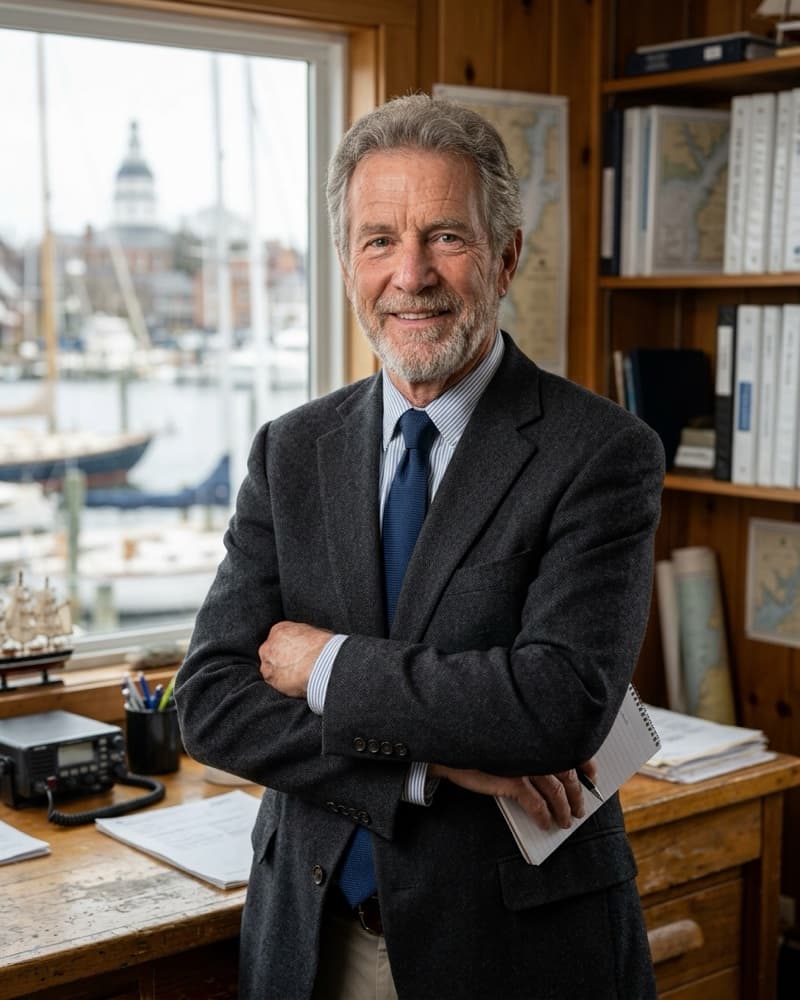
Obadiah Fenwick
Executive Director, Chesapeake Watermen's Cooperative Association
In this episode
Obadiah Fenwick, executive director of the Chesapeake Watermen's Cooperative Association, explains what federal grant reporting looks like when your entire staff is three people, and why he's already watching a federal indirect-cost cap proposal that hasn't actually been introduced yet.
Guests
Obadiah Fenwick — Executive Director, Chesapeake Watermen's Cooperative Association. Postal-rate and federal-grant voice for small co-ops.
Chapters
00:00 Intro
01:20 The association: 48 co-ops, three staff
05:40 How much of the budget federal grants represent
08:30 What a federal grant actually requires in reporting
14:00 Doing compliance work with no dedicated grants staff
19:15 Indirect costs, explained plainly
23:45 Why a cap that hasn't been proposed already worries him
27:30 A natural coalition with library federations
30:20 What NANA can do that his association can't do alone
33:40 Whether walking away from grants was ever an option
36:30 A better reporting model, if he could design one
39:00 Outro
Transcript
Host: Obadiah, set the scene for listeners first. What is the Chesapeake Watermen's Cooperative Association, and who does it represent?
Obadiah Fenwick: We represent 48 commercial fishing co-ops working the Chesapeake Bay — crabbers, oystermen, a few finfish operations. Total staff is three people, myself included, out of a dock office in Annapolis. We're about as small as an association gets while still being a real organization with real federal reporting obligations.
Host: Where do federal grants come into a fishing co-op association's budget?
Obadiah Fenwick: A meaningful share of our funding comes through federal fisheries-management and habitat-restoration grants, passed through state agencies in some cases, direct in others. That money funds real work — gear-loss programs, habitat surveys our members help run — but it comes with reporting obligations that don't scale down just because our staff does.
Host: Before we get into the reporting itself, how big a share of your total budget do these federal grants actually represent?
Obadiah Fenwick: It varies year to year depending which grants we're carrying, but in a typical year it's a meaningful minority of total revenue, well below half, with membership dues from our 48 co-ops still the largest single source. The reporting burden isn't proportional to that share, though — even a smaller grant carries close to the same paperwork load as a larger one, which is exactly the mismatch I want to get into.
Host: Walk me through what that reporting actually requires.
Obadiah Fenwick: Quarterly financial reports tied to specific grant line items, an annual programmatic report showing outcomes against the grant's stated goals, time-and-effort documentation for any staff hours charged to the grant, and periodic audits depending on total federal funding received in a given year. Each of those is manageable on its own. All of them together, with three people also running the association's core work, is a real strain.
Host: How do you actually get it done without a dedicated grants manager?
Obadiah Fenwick: Honestly, unevenly, and I'll say that plainly rather than pretend otherwise. I do the programmatic reporting myself because I'm closest to the actual work. Our office manager handles the financial side alongside dues billing and everything else that keeps three people running an association. We've been late on a report exactly once, caught it ourselves, and disclosed it before anyone asked — but I know we're one bad month away from that happening again, because there's no slack in the system.
Host: You mentioned an indirect-cost cap that concerns you, even though it hasn't been proposed yet. Explain indirect costs first, for anyone who doesn't work with federal grants.
Obadiah Fenwick: Indirect costs are the overhead a grant is allowed to cover beyond the direct program work — a share of rent, utilities, administrative staff time, insurance. For an organization our size, that overhead is a real cost of doing the grant-funded work at all, since we don't have a separate building or dedicated grants department to absorb it elsewhere.
Host: So why does a cap that hasn't been proposed already worry you?
Obadiah Fenwick: Because federal grant policy has periodically floated capping indirect-cost recovery at a flat percentage, and every time it comes up, the math hits a small grantee much harder than a large one. A large university or national nonprofit can absorb a percentage cap because their direct program spending is enormous relative to fixed overhead. A three-person association like ours has almost no direct-spending base to spread the same fixed overhead across, so a flat percentage cap would cover a much smaller share of our actual costs than it would for a bigger grantee. Nothing specific is on the table right now, as far as I know, but I've watched this idea resurface before, and I'd rather NANA and its members be making the case for small grantees before a specific proposal lands than scrambling to respond after.
Host: What is NANA actually doing on this, given nothing's been proposed yet?
Obadiah Fenwick: Farah Qureshi-Lindgren, NANA's Senior Policy Manager, tracks the federal grant landscape more broadly, and part of what she's asked members like me to do is simply document what a cap would mean in concrete terms — real numbers from a real three-person association, not a hypothetical — so that if a proposal does surface, there's already a specific counter-example ready, rather than starting from scratch.
Host: You mentioned Lucinda Farrow-Mbatha's library federation on postal rates before we started recording. Is there a natural coalition between organizations like hers and yours, given how similar the small-staff, federal-adjacent problem is?
Obadiah Fenwick: More than a little, yes, even though libraries and fishing co-ops have nothing in common on the surface. Both of us are small staffs serving members who depend on federal programs — postal rates for her, grant reporting for us — where the burden falls disproportionately hard on the smallest organizations regardless of the specific policy area. I'd welcome a joint letter with an organization like hers if the timing ever lined up, because the shared theme, that federal policy often assumes a scale of staff capacity smaller organizations simply don't have, is the same argument either way.
Host: What can NANA do here that your association can't do alone?
Obadiah Fenwick: Scale, mostly. My voice alone, a three-person association in Annapolis, doesn't move federal grant policy. NANA aggregating that same concern across dozens of small member organizations with similar staffing, and pairing it with research on what small grantees actually look like, has a much better chance of being heard before a specific bad proposal ever gets written, rather than only being able to react once it has.
Host: Going back to the reporting burden itself — has the association ever considered simply not pursuing federal grants, to avoid the compliance overhead entirely?
Obadiah Fenwick: We've discussed it, honestly, more than once around the board table. The math never quite works out in favor of walking away. The habitat-restoration and gear-loss work those grants fund is real work our 48 co-ops depend on, and the alternative funding sources available to us — member dues from small fishing co-ops, mostly — couldn't come close to replacing it. So the answer so far has always been that we absorb the reporting burden as the cost of the funding, even though it strains three people more than I'd like.
Host: Is there a version of federal grant reporting that would actually work better for an organization your size, if you could design it yourself?
Obadiah Fenwick: Something closer to a simplified reporting track scaled to grant size, similar to how some federal programs already offer a lighter compliance path for smaller awards. We're not asking to skip accountability — that's fair regardless of staff size — just for the reporting format itself to acknowledge that a three-person association filling out the same forms as a hundred-person grantee organization is spending a wildly different share of its capacity on the same paperwork.
Host: Obadiah, thanks for making a fairly technical topic concrete.
Obadiah Fenwick: Thank you. It only stays technical and abstract until someone has to actually do the reporting with three people. I'd rather people understood that part now, before there's a specific bad proposal to react to instead of just to anticipate.

Listen to the episode
40 min · Season 2, episode 6