
Season 2, episode 7
Four People, No Office
Cascadia Forest Products Council executive director Signe Thorvaldsen on running a 140-company trade association with four staff and no shared office, five years into going remote-first.
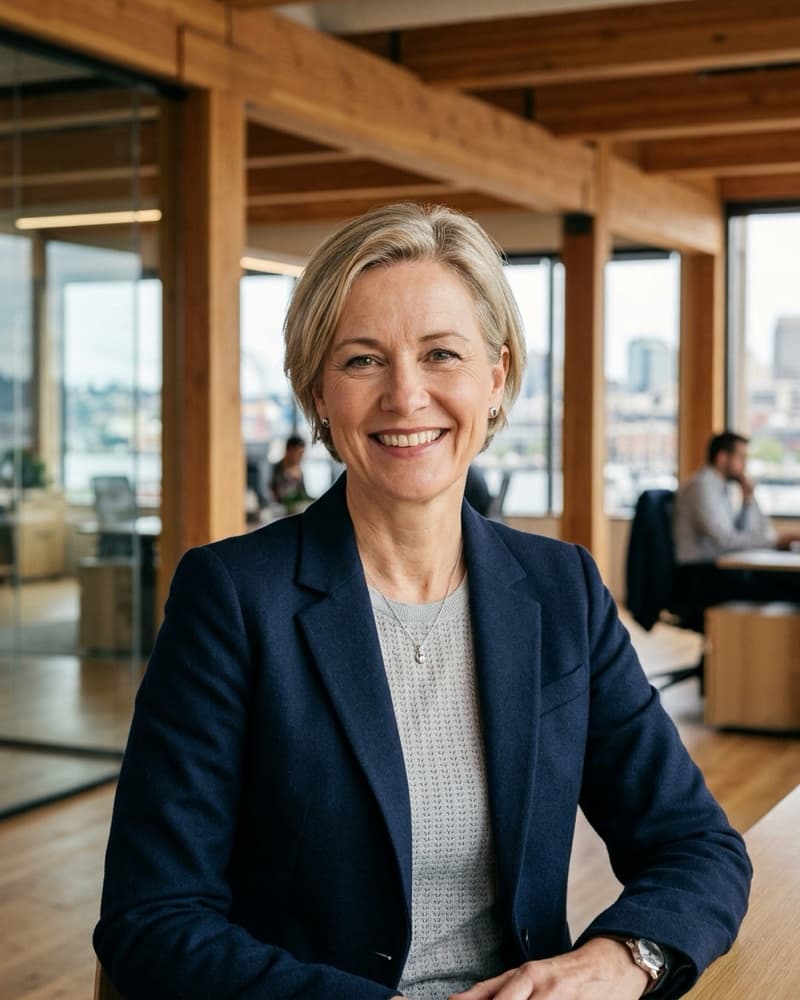
In this episode
Signe Thorvaldsen, executive director of the Cascadia Forest Products Council, on the lease her association let go in 2020, what running a 140-company trade group with four staff and no office actually costs, and what she'd tell another small-staff executive weighing the same move.
Guests
Signe Thorvaldsen — Executive Director, Cascadia Forest Products Council. Runs a four-person staff. Remote-first since 2020.
Chapters
00:00 Intro
02:10 What the Council does for 140 mills and forest-products firms
06:45 The lease that ended in March 2020
11:30 What "remote-first" means with four people
17:00 The budget line that disappeared
21:40 Hiring without a home city
26:15 What members actually notice, and what they don't
31:00 The trade-offs nobody puts in the case study
35:20 Outro
Transcript
Host: Signe, the Council has never had an office since I've known you, but that wasn't always true. Take me back to 2020.
Signe Thorvaldsen: It wasn't a plan. We had a small suite in downtown Tacoma, four staff at desks, and a lease that came up for renewal that spring. Everyone was already working from home by the time the renewal notice arrived, and none of us had been back in the office in six weeks. My board chair asked me a plain question on a call: what is this space actually for right now? I didn't have a good answer, so we let it lapse.
Host: That sounds like a decision made under pressure, not conviction. Did it become a real strategy, or did you just never get around to signing a new lease?
Signe Thorvaldsen: Both things were true at first. For about a year it was genuinely just "we haven't found a reason to." What made it a strategy was the first full budget cycle without rent, utilities, and a lease line in it. That was real money for an association our size, and once the board saw what else that money could do, going back to an office would have needed its own justification, not the other way around.
Host: Walk me through what the Council actually does, for anyone who doesn't know it.
Signe Thorvaldsen: We represent about 140 companies — mills, sawyers, a handful of engineered-wood manufacturers — mostly in Washington and Oregon. It's a narrow, technical membership. We track timber-harvest regulation, freight and rail capacity out of the Pacific Northwest, and workforce issues in an industry that's had a hard time recruiting for twenty years. Four staff cover all of it: me, a policy director, a member services person, and someone who splits communications and events.
Host: With four people covering that much ground, what does a normal week look like without a shared office to coordinate it in?
Signe Thorvaldsen: We have a standing half-hour call three mornings a week, and beyond that we work asynchronously more than most people expect. My policy director is in Olympia, close to the legislature, which actually helps her work. Our member services lead is in Spokane, on the other side of the state from most of our members' mills, which nobody would have chosen deliberately if we were still hiring for a downtown office, but it turned out to matter less than the location snobbery in my own head told me it would.
Host: You mentioned the budget line that disappeared. Put a number on it, if you can.
Signe Thorvaldsen: Rent and utilities on that suite ran us a little over forty thousand dollars a year. That doesn't sound enormous next to a large association's budget, but for a group with four staff and no seven-figure conference to lean on, forty thousand dollars is real. We put roughly half of it into member-facing work — more site visits to mills, a bigger regulatory-comment budget — and the other half into a stipend every staff member gets for a home office setup and a co-working day if they want one, which nobody's actually used more than a few times a year.
Host: Did you worry that going remote would make the Council harder to reach, or less credible to members who are used to associations with a physical headquarters?
Signe Thorvaldsen: I worried about it constantly the first year. What I learned is that our members don't experience us through an office address. They experience us through whether we answer the phone, whether we show up at their mill when there's a permitting fight, and whether the regulatory comment we file on their behalf is any good. None of that requires a lease. If anything, not having an office pushed us to be more visible in the field because we couldn't fall back on "come see us downtown."
Host: How has it changed hiring? A lot of small associations still assume they need to hire someone who can commute to a headquarters city.
Signe Thorvaldsen: It opened the applicant pool enormously. When we hired our communications and events person two years ago, we had candidates from four states, and the person we hired lives ninety minutes from the nearest city with a direct flight to anywhere. She wouldn't have applied to a Tacoma-based job posting. For an industry as regionally specific as ours, being able to hire someone who actually grew up around timber towns, rather than someone willing to relocate for an office job, has made our policy work sharper, not weaker.
Host: What's the honest trade-off? I don't want this to sound like it was free.
Signe Thorvaldsen: Onboarding is slower. When we brought the policy director on, it took her longer to build the kind of trust with staff that used to happen by accident over a shared coffee maker. We've had to be deliberate about that — pairing her with me on member calls for the first few months instead of assuming she'd absorb our culture by proximity. And travel costs went up, not down, because the four of us now fly to meet each other and members in person a few times a year instead of walking down a hallway. It's not a free lunch. It's a different set of costs, and for us they've been worth paying.
Host: If another small-staff executive is listening and weighing whether to let their own lease go, what would you tell them to check first?
Signe Thorvaldsen: Whether your members actually value the office, or whether you've just assumed they do. Ask them directly. Ours told us, once we asked, that they'd rather have a policy director in Olympia during session than a receptionist in Tacoma. That answer might be different for a membership that expects to drop by, or one with a big physical library or archive. Don't copy our answer. Ask your own members the question we asked ours.
Host: You said onboarding is slower without an office. Is there anything you'd do differently now, five years in, to fix that specific problem?
Signe Thorvaldsen: I'd build the deliberate structure sooner. We spent most of the first year assuming culture would transmit on its own the way it used to in the Tacoma suite, and it didn't, because there was no hallway for it to travel down. Once we admitted that and built actual structure — paired calls, a documented decision log so nobody has to guess what was agreed three months ago, a standing agenda item for "what did a member tell you this week" — it caught up fast. The mistake wasn't going remote. It was assuming remote would run itself the same way an office does.
Host: Has any member ever asked you directly why the Council doesn't have a physical address anymore?
Signe Thorvaldsen: A handful, mostly older mill owners who'd visited the old suite once or twice over the years out of habit more than need. I tell them the same thing every time: the address bought us a place to receive mail and hold the occasional meeting, and it cost more than a year's dues from fifteen of their smaller peers combined. Once I put it that way, the question usually stops. Nobody's ever come back a second time to argue for bringing the lease back.
Host: Signe, thanks for laying out the real numbers on this.
Signe Thorvaldsen: Thanks for having me. If it saves someone a year of agonizing over a lease renewal, it was worth the trip.

Listen to the episode
36 min · Season 2, episode 7