
Season 3, episode 4
Sharing a Finance Manager
Southeast chapter chair Dana Whitfield, who built the shared-services pilot in 2023, on how eleven small associations now split one finance manager, one events coordinator, and one AMS license.
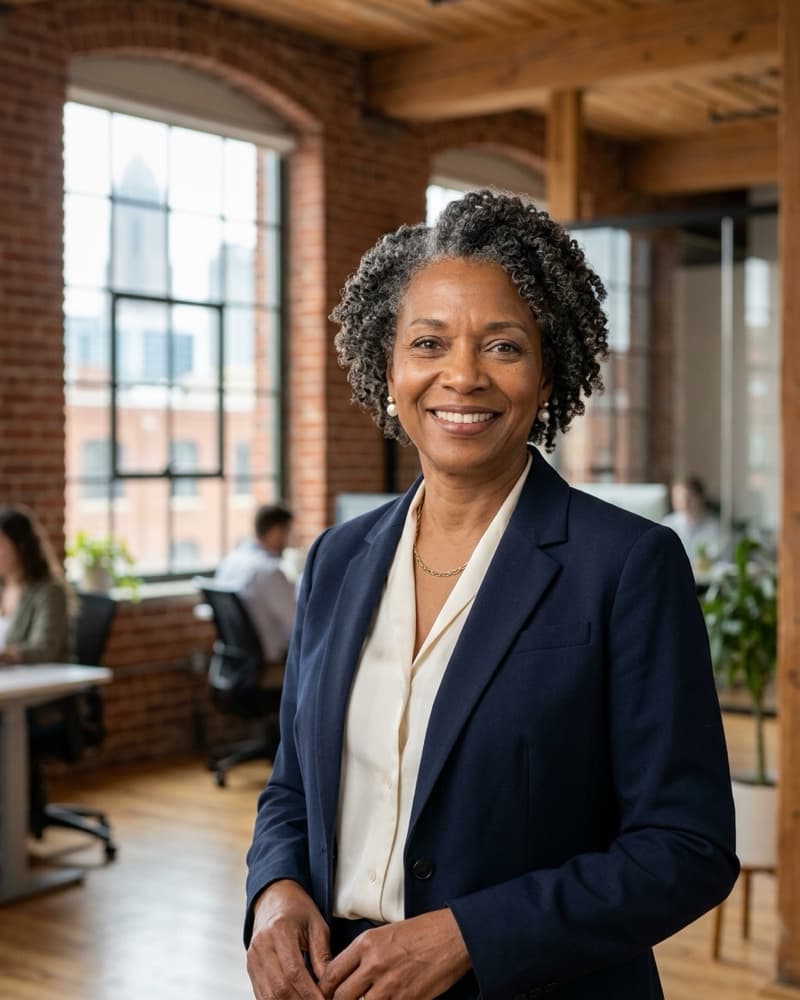
Dana Whitfield
Chapter Chair, Southeast, Southeastern Textile Manufacturers Council
In this episode
Dana Whitfield, president and CEO of the Southeastern Textile Manufacturers Council and chair of NANA's Southeast chapter, on the shared-services pilot she built in 2023 — now eleven organizations deep — and why a national rollout is on the calendar for 2027.
Guests
Dana Whitfield — Chapter Chair, Southeast; President and CEO, Southeastern Textile Manufacturers Council. Architect of the 2023 shared-services pilot.
Chapters
00:00 Intro
01:50 The eight-hours-a-week problem that started it
06:40 Building the pilot in 2023
11:15 What "sharing" a finance manager actually means operationally
16:00 Growing from four organizations to eleven
20:30 Rocky Mountain Outfitters joining remotely
25:10 What the model doesn't solve
29:30 The 2027 national rollout forum
34:10 Outro
Transcript
Host: Dana, start with the problem. What made you build this in the first place?
Dana Whitfield: My own council, and every small association I talked to in this region, kept running into the same math problem. A controller or finance manager with real nonprofit accounting experience wants a full-time role, or close to it. Most of my peer organizations — three, four, five staff total — only had about eight hours a week of actual finance work: reconciling accounts, closing the month, preparing board financials. Paying full-time wages for eight hours of weekly need is how you either overpay badly or end up with someone underqualified doing your books part-time, badly, alongside three other jobs.
Host: How did you actually build the pilot in 2023? Walk me through the mechanics.
Dana Whitfield: We hosted it here at the Southeastern Textile Manufacturers Council — I hired one finance manager as our own employee and then contracted her time out to four other small associations in the region, each paying a share proportional to the hours they used. It started with five organizations total, including us. The finance manager works a genuinely full week, just split across five sets of books instead of one, and every organization gets real nonprofit accounting expertise they couldn't have afforded to hire alone.
Host: What does "sharing" actually mean operationally? Is she in five different accounting systems, five different board meetings a month?
Dana Whitfield: Effectively, yes, though we've standardized where we can. All five organizations use compatible accounting software now, which wasn't true at the start and took real coordination to get there. She attends each organization's board finance-committee meeting, prepares each set of monthly financials separately, and manages five separate relationships with five separate boards, each of whom she has to treat as her actual employer's board even though her paycheck comes from us. It's more juggling than a single full-time finance job, honestly, but it's juggling five part-time-sized workloads instead of covering one overstretched full-time role badly.
Host: You've grown from that original group to eleven organizations now. What drove that growth?
Dana Whitfield: Word of mouth, mostly, through the Southeast chapter itself. Once a couple of the original five organizations started talking about it at chapter meetings, other small associations in the region wanted in, and we expanded the model to add an events coordinator and a shared AMS license alongside the finance manager, since the same economics apply to those functions — most small associations need someone running events or an association management system part-time, not full-time. We're at eleven organizations now sharing across the three services, though not every organization uses all three.
Host: Rocky Mountain Outfitters and Guides Council joined remotely in 2025, which is a different region entirely from your original Southeast group. How does that work geographically?
Dana Whitfield: Better than I expected, honestly. The services are mostly remote anyway — the finance manager doesn't need to be in the same building as any of the five original organizations, so adding an organization in Cheyenne instead of Charlotte didn't change the actual work much. Hollis Greenleaf runs a two-person staff there, which is exactly the size problem this model was built to solve, just fifteen hundred miles from where we started it.
Host: What doesn't this model solve? I don't want this to sound like a fix for every small-association staffing problem.
Dana Whitfield: It solves finance, events, and AMS administration specifically, because those are functions that don't require deep, organization-specific institutional knowledge built up over years — a good finance manager can learn a new set of books. It doesn't solve membership recruitment, or advocacy, or anything that depends on a staff member knowing an organization's specific members and specific political relationships intimately. Those functions still need to be owned inside each organization, full-time equivalent or not. I'd be doing a disservice to anyone listening if I implied shared services is a general answer to small-staff capacity.
Host: There's a Southeast Shared-Services Forum planned for 2027 — a national rollout launch. What does "national rollout" actually mean at that point?
Dana Whitfield: It means moving this from something Southeast members found through word of mouth at chapter meetings to something NANA offers as a structured option across all six chapters, with staff support for setting up the shared arrangement rather than each region having to reinvent what we built informally here. The forum in Charlotte next August is where we'll present the actual model — the cost-sharing math, the standardized-systems lesson, what Rocky Mountain's remote experience taught us — to member organizations from every chapter, not just Southeast's.
Host: If a small association's executive director is listening right now, doing that same eight-hours-a-week math on their own finance function, what would you tell them to do first?
Dana Whitfield: Find two or three other small organizations near you, or in your same chapter, who you already trust, and start the conversation before the forum next year if you don't want to wait. You don't need NANA's structure to begin — I built the first version of this with four phone calls and a handshake agreement on cost-sharing before anything was formal. The formal version makes it easier and more durable, but it doesn't have to be the thing that gets you started.
Host: You're also the board sponsor of nothing directly, but Celeste Vranas has pointed to your model as a possible template for the Heartland chapter petition region. Have you talked to her about that directly?
Dana Whitfield: We have, a couple of times. Celeste's petition organizations in the Kansas City area are a similar size profile to my original five — small staffs, real finance need, no individual budget for a full-time controller. I've told her the same thing I'd tell anyone: the model transfers, but the trust has to be built locally. I can hand over the cost-sharing structure and the lessons about standardizing systems. I can't hand over the relationships between those specific organizations, and that part takes time no matter how good the template is.
Host: How do you handle it when one of the eleven organizations wants more of the finance manager's time than their share covers, especially during a busy season like fiscal year-end?
Dana Whitfield: We built in overflow capacity from the start rather than pretending five, then eleven, organizations would never collide on timing. Fiscal year-ends do cluster, since a lot of small associations run on a calendar year. We stagger deadlines where organizations are willing to shift them slightly, and for the weeks we can't stagger around, we bring in a part-time contractor to absorb overflow rather than let any one organization's books slip. It costs a little more during those weeks, but it's built into what everyone pays across the year, not an emergency surcharge nobody saw coming.
Host: Last question. Any regret about how you built this, looking back three years later?
Dana Whitfield: I'd have written the cost-sharing formula down formally in year one instead of running it on a handshake for the first several months. It worked fine among five organizations who already trusted each other, but by the time we hit eight or nine, new organizations joining wanted to see the actual math in writing before committing, and I had to reconstruct it after the fact instead of handing over something that already existed. Small thing, but it would have saved a few awkward conversations.
Host: Dana, thanks for walking through how this actually works.
Dana Whitfield: Thanks for having me. Come find me at the forum next August if you want the longer version with the actual spreadsheets — I'll bring the real cost-sharing numbers, not just the story version I've told today.

Listen to the episode
35 min · Season 3, episode 4